


Figuring out which probiotic is right for you is a deeply personal journey. There’s no single "best" option because the ideal choice hinges entirely on your unique health goals. For general digestive harmony, strains like Lactobacillus acidophilus are a great starting point, while Bifidobacterium lactis is often the go-to for immune support. The secret is to match the probiotic strain to what your body actually needs.
Finding the Right Probiotic for You

The path to better gut health usually starts with a simple question: "What's the best probiotic?" But the truth is, there's no one-size-fits-all answer. Your gut microbiome—that bustling community of trillions of microorganisms in your digestive tract—is as unique as your fingerprint.
Think of your gut as a garden. To get it to flourish, you need to plant the right seeds (probiotics) for your specific soil and climate. What works wonders for one person’s garden might not do a thing for another’s. That's why the first, most critical step is figuring out your own wellness goals.
Define Your Wellness Goals
Before you even look at a supplement bottle, you need a clear idea of what you want to achieve. Are you trying to calm down occasional bloating and gas? Or maybe you’re looking to strengthen your immune system, especially since about 80% of it is housed right in your gut.
Pinpointing your main objective helps cut through the noise and narrow down the overwhelming number of choices. Common reasons people turn to probiotics include:
- Improving Digestion: To help your body break down food more efficiently and reduce discomfort.
- Supporting Immune Function: To keep your gut bacteria in a healthy balance that supports your body's natural defenses.
- Managing Digestive Disruptions: To get things back on track after a round of antibiotics or during stressful times.
- Boosting Overall Well-being: To support everything from mood to how well you absorb nutrients.
A Roadmap to Your Ideal Probiotic
Consider this guide your roadmap. We’re going to move past the generic advice and help you become your own gut health expert. You'll learn how to stop getting lost in confusing labels and slick marketing and start making confident, informed decisions.
The most effective approach isn’t about finding a single "best" product. It's about identifying the specific probiotic strains that align with your personal health goals. This simple shift turns a confusing choice into an empowered one.
We’ll break down the science behind different probiotic strains and link them to real-world benefits. You’ll learn to read a supplement label like a pro, making sure the product you choose is potent, effective, and free of anything you don’t want. By the end, you'll know exactly how to select the best probiotics for gut health to help you reach your wellness vision and transform your health from the inside out.
Your Gut Microbiome: An Inside Look
Picture a thriving, bustling city operating entirely within your digestive tract. This city is your gut microbiome, a complex ecosystem home to trillions of microorganisms like bacteria, viruses, and fungi. Just like any functional city, it needs a delicate balance between its different residents to keep everything running smoothly.
This internal community is critical for more than just breaking down your last meal. It's a central hub for your overall wellness, influencing everything from how you absorb nutrients to the strength of your immune system. In fact, a huge portion of your immune cells—around 70-80%—reside right in your gut, working hand-in-hand with your microbes.
When this microbial city is in harmony, the beneficial bacteria flourish. They help you digest food, produce essential vitamins, and keep harmful bacteria from taking over. But this balance can be surprisingly easy to disrupt.
When the Ecosystem Gets Unbalanced
Things like stress, a poor diet, illness, or a round of antibiotics can throw your gut microbiome out of whack. This imbalance, known as dysbiosis, is like having too many troublemakers and not enough peacekeepers in your city. The result? Uncomfortable digestive issues like bloating, gas, and irregular bowel movements.
This is where probiotics and prebiotics come into the picture. To restore order, you need to support the "good guys."
Think of your gut as a garden. Probiotics are the beneficial seeds you plant to grow healthy flora, while prebiotics are the nutrient-rich fertilizer that helps those seeds flourish.
Getting this distinction right is the first step toward effectively supporting your gut health. They work as a team, but they play very different roles in cultivating a healthy internal environment.
Probiotics: The Helpful Residents
Probiotics are the live, beneficial bacteria themselves. When you consume probiotic-rich foods or a supplement, you're directly adding more helpful residents to your gut's population. These are the active workers that get things done.
Their main jobs include:
- Restoring Balance: They help replenish the good bacteria, crowding out the harmful ones to restore harmony after a disruption.
- Aiding Digestion: Probiotics assist in breaking down food components your body can't digest on its own, which can ease discomfort.
- Supporting Immunity: By maintaining a healthy gut lining and communicating with immune cells, they contribute to a robust immune response.
You can find probiotics in fermented foods like yogurt, kefir, kimchi, and sauerkraut. A targeted supplement can also deliver specific strains known for their benefits, making them a key tool for finding the best probiotics for gut health.
Prebiotics: The Essential Food Source
Now for the other half of the equation. Prebiotics aren't bacteria; they are a type of specialized plant fiber that acts as food for your good gut bacteria. Humans can't digest these fibers, so they travel all the way to your large intestine, where your friendly microbes get to feast on them.
This feeding process is vital. It allows your existing good bacteria to multiply and strengthen their colonies. This synergy is what makes a gut health strategy truly effective.
Prebiotics are found in a variety of high-fiber foods, such as:
- Garlic, onions, and leeks
- Asparagus and Jerusalem artichokes
- Bananas (especially when slightly green)
- Oats and barley
By eating a diet rich in these foods, you're providing the fuel your microbiome needs to thrive. You can learn more about this crucial connection by reading our guide on the connection between high-fiber vegetables and a healthy gut microbiome.
Ultimately, a flourishing gut microbiome relies on both introducing beneficial bacteria (probiotics) and feeding them well (prebiotics). This powerful combination creates a resilient internal ecosystem that supports your digestion, immunity, and overall well-being from the inside out.
Matching Probiotic Strains to Your Health Goals
Not all probiotics are created equal. When you step into the supplement aisle, it’s easy to feel overwhelmed by the sheer variety of products, each with a different blend of names and numbers. The key to finding the best probiotics for gut health is understanding one simple fact: specific bacterial strains perform specific jobs, just like specialists on a medical team.
Choosing a probiotic without looking at the specific strains is like hiring a general handyman for a tricky plumbing issue. You might get lucky, but for the best results, you need the right expert for the job. This is where strain specificity becomes your most powerful tool for hitting your wellness targets.
A probiotic’s name, like Lactobacillus acidophilus LA-5, tells you everything you need to know. It breaks down into its genus (Lactobacillus), species (acidophilus), and the specific strain (LA-5). That last part—the strain—is what really matters. It’s the unique identifier that researchers study in clinical trials and the part that links a probiotic to a proven health benefit.
The relationship between your gut, these beneficial bacteria (probiotics), and their fuel source (prebiotics) is fundamental to your health.
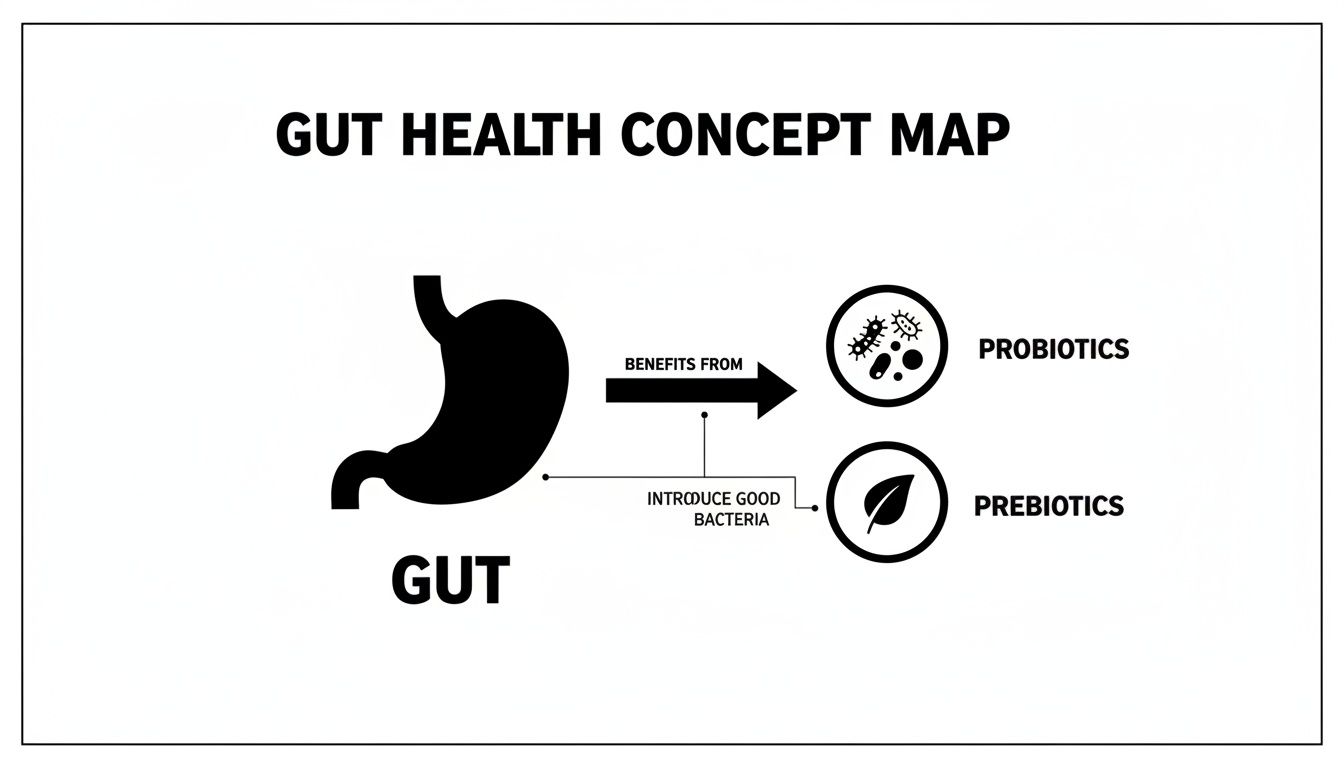
This visual really drives home how introducing good bacteria and feeding them well is a core strategy for keeping your gut ecosystem in balance.
Strains for General Digestive Balance
If you're simply looking for everyday digestive support, certain strains are well-known for their ability to maintain harmony in the gut. Think of them as the dependable all-rounders of the probiotic world.
A perfect example is Lactobacillus acidophilus. It's one of the most researched probiotics out there, famous for its work in the small intestine. It helps your body digest dairy by producing the lactase enzyme and generally works to keep the environment balanced.
Another key player is Bifidobacterium bifidum. This strain is a primary resident of your large intestine and is one of the very first to colonize our guts as infants. It’s a champ at breaking down dietary fibers our bodies can't handle alone, turning them into beneficial compounds that nourish the gut lining.
Fortifying Your Immune System
Since a huge portion of your immune system—around 70%—is located in your gut, it's no surprise that certain probiotic strains are excellent at supporting its function. They act like diligent gatekeepers, helping to regulate your immune responses.
Bifidobacterium lactis is a powerhouse in this department. It's known for its resilience and ability to survive the harsh journey through your digestive tract. Research suggests it helps support a robust immune response and maintains a healthy gut barrier, which is critical for keeping unwanted substances out of your bloodstream.
Another fantastic strain is Lactobacillus plantarum. This versatile probiotic helps reinforce the gut lining and can even produce its own natural antimicrobial compounds. This keeps potentially harmful bacteria in check, giving your body’s defenses an extra layer of support.
Think of these immune-supporting strains as trainers for your gut’s security team. They don’t just fight off trouble; they help the entire system become smarter, stronger, and more prepared to handle challenges.
By promoting a balanced gut environment, these specific bacteria help ensure your immune system can function at its best without becoming overreactive.
Managing Acute Digestive Disruptions
Sometimes, your gut needs more targeted support, especially after a round of antibiotics or during travel. While necessary, antibiotics don't distinguish between good and bad bacteria, which often leads to a temporary imbalance and digestive distress.
This is where Saccharomyces boulardii, a beneficial yeast, truly shines. Because it's a yeast and not a bacterium, it’s completely unaffected by antibiotics. This means you can take it alongside them to help maintain gut balance. It works by crowding out disruptive microbes and supporting your gut's natural recovery.
Similarly, Lactobacillus rhamnosus GG is one of the most extensively studied strains for managing antibiotic-associated diarrhea. It has a remarkable ability to stick to the intestinal wall, helping to restore a healthy microbial community quickly and effectively.
A Guide to Probiotic Strains and Their Benefits
To make this all a bit more digestible, I've put together a quick-reference guide. Use this table to identify which probiotic strains have been researched for specific digestive and immune health concerns.
| Health Concern | Recommended Probiotic Strains | Primary Benefit |
|---|---|---|
| Overall Digestive Health | Lactobacillus acidophilus | Supports nutrient absorption and helps maintain a balanced gut environment. |
| Bloating and Gas | Bifidobacterium infantis | Known to help alleviate symptoms associated with Irritable Bowel Syndrome. |
| Immune System Support | Bifidobacterium lactis | Enhances the body's natural immune response and strengthens the gut barrier. |
| Antibiotic-Related Disruption | Saccharomyces boulardii | A beneficial yeast that helps prevent diarrhea associated with antibiotics. |
| Traveler's Diarrhea | Lactobacillus rhamnosus GG | Helps protect and restore gut balance when exposed to new environments. |
Consider this table your starting point. By aligning your specific health needs with scientifically studied strains, you can move beyond generic solutions and toward a personalized strategy for gut wellness. This targeted approach is the most effective way to harness the power of probiotics and achieve meaningful, lasting results.
How to Read a Probiotic Label Like an Expert
Stepping into the supplement aisle can feel like navigating a maze of flashy labels and bold claims. With the wellness industry booming, it’s more critical than ever to actually understand what you're buying. Learning how to decode a probiotic label is your single best tool for cutting through the marketing hype to choose a high-quality product that will deliver real results.
Think of a probiotic label as the blueprint for your gut’s garden. It tells you exactly which "seeds" are inside, how many there are, and how they’re protected. By mastering just four key checkpoints, you can confidently size up any supplement and find the best probiotics for gut health that match your personal wellness goals.
Checkpoint 1: CFU Count
One of the first things you'll spot on a label is the CFU count, which stands for Colony Forming Units. This number tells you how many live, active bacteria are in each dose. It's a common misconception to assume that a higher CFU count is always better, but that’s not quite how it works.
Potency isn't just about sheer numbers; it’s about the right number for the right job. A product boasting 100 billion CFUs isn't automatically superior to one with 20 billion CFUs. The ideal dose depends entirely on the specific strains included and the health concern you're targeting. Some strains work wonders at lower doses, while others need a higher count to be effective.
Instead of just chasing the biggest number, look for products that guarantee their CFU count through the end of their shelf life, not just at the time of manufacture. This is a crucial detail that ensures the bacteria are still viable when you actually take them.
Checkpoint 2: Strain Specificity
This is arguably the most critical part of the label. As we've covered, not all probiotics are created equal. Seeing a generic name like Lactobacillus acidophilus simply isn’t enough information. You need to look for the full strain designation, which includes the genus, species, and the all-important strain code, like Lactobacillus acidophilus NCFM.
That final code is the key. It identifies the specific, scientifically studied version of the bacteria that has been linked to proven health benefits in clinical trials.
A product label that omits specific strain names is a major red flag. It’s like a recipe that just lists "flour" without telling you if it’s bread flour or cake flour—the outcome will be drastically different. Always insist on strain-level transparency.
When you see a specific strain listed, you can actually research its benefits and confirm it aligns with your health goals, whether that’s immune support, digestive relief, or something else entirely. This level of precision is what separates a truly effective probiotic from a generic one.
Checkpoint 3: Delivery Method and Stability
Probiotics are delicate, living organisms. For them to do any good, they have to survive the harsh, acidic journey through your stomach and arrive alive in your intestines. This is where the delivery method and product stability become absolutely essential.
Look for key features that help protect the bacteria:
- Delayed-Release Capsules: These are special capsules with an enteric coating designed to withstand stomach acid. They pass through the stomach fully intact and only dissolve once they reach the more alkaline environment of the intestines, releasing the probiotics right where they're needed most.
- Shelf-Stable Formulas: While some probiotics need to be refrigerated, many modern formulas use advanced freeze-drying techniques. This keeps the bacteria dormant until they're exposed to moisture in your digestive tract, offering greater convenience and ensuring potency without the hassle of cold storage.
A product’s ability to successfully deliver live bacteria to your gut is every bit as important as the strains and CFUs it contains.
Checkpoint 4: Clean Labels and Extra Ingredients
Finally, always scan the "other ingredients" section. A high-quality probiotic should be free of unnecessary fillers, artificial colors, and common allergens. This is especially important if you have any dietary restrictions or sensitivities.
Look for labels that clearly state the product is:
- Vegan or vegetarian
- Gluten-free, soy-free, and dairy-free
- Non-GMO
- Free of artificial sweeteners or preservatives
The global demand for probiotics is skyrocketing. The market is valued at around USD 114 billion as of 2025 and is projected to reach an incredible USD 417 billion by 2035. With so many options flooding the shelves, choosing products with clean, transparent labels helps ensure you’re investing in your health without any unwanted additives. You can dive deeper into this growing market with insights from Precedence Research.
By checking these four elements—CFU count, strain specificity, delivery method, and label cleanliness—you can cut right through the noise. This empowers you to make an educated choice and select a truly effective supplement. Feel free to explore a curated selection of high-quality, clean-label options in our collection of probiotics and digestive enzymes.
Making Your Probiotics Work Harder for You
Taking a probiotic is a fantastic first step, but it’s not the whole story. To really get your money’s worth, you need to create an environment where these beneficial bacteria can actually set up shop and thrive.
Think of it like planting a garden. You can't just toss seeds on dry, hard ground and expect a lush harvest. You need to prepare the soil and provide water and sunlight. It’s the same with your gut—probiotics need the right support system to colonize and deliver their full benefits. That means thinking about when you take them, how consistently you do it, and what you eat.
Timing and Consistency Are Key
One of the first questions people ask is when they should take their probiotic. While there's some debate, many experts suggest taking them about 20-30 minutes before a meal or alongside a light one. This little bit of food can act as a buffer, helping protect the bacteria from harsh stomach acid on their journey to your intestines.
But honestly, the most critical factor isn't the exact time of day—it's consistency. Taking your probiotic every single day helps maintain a steady, healthy population of good bacteria. If you only take it here and there, the microbes won't get the chance to establish themselves and make a real difference.
Building a healthy gut microbiome is a marathon, not a sprint. Daily, consistent use is the secret to seeing real, lasting results and truly supporting your digestive wellness from the inside out.
Find a time that fits your daily routine, whether it's with your morning smoothie or right before you go to sleep, and stick to it. This simple habit is what makes all the difference.
Feed Your Friends with Prebiotics
Probiotics are living organisms, and just like us, they need to eat. That’s where prebiotics come in. Prebiotics are specific types of fiber that your body can't digest, so they travel down to your gut and become the perfect meal for your friendly bacteria.
Weaving prebiotic-rich foods into your diet is one of the best ways to supercharge your probiotic supplement. It’s a powerful symbiotic relationship—the probiotics you introduce will flourish if they’re well-fed.
Some excellent food sources of prebiotics include:
- Garlic and Onions: These kitchen staples are packed with inulin, a powerhouse prebiotic fiber.
- Bananas: Slightly green bananas are especially good, as they contain resistant starch that feeds beneficial bacteria.
- Oats and Barley: These whole grains are a fantastic source of another prebiotic fiber called beta-glucan.
- Asparagus: A great source of inulin that helps strains like Bifidobacteria thrive.
Create a Gut-Friendly Lifestyle
Finally, remember that your overall lifestyle plays a massive role in your gut health. A probiotic supplement can't single-handedly counteract the effects of a high-stress life or a diet filled with processed foods.
Managing stress through practices like meditation, deep breathing, or yoga can have a direct, positive impact on your gut. And don't underestimate the power of sleep—aiming for 7-9 hours a night gives your body the time it needs to repair and maintain a healthy gut lining.
A diet rich in diverse, whole foods provides a wide range of fibers and nutrients that support a varied microbiome. Adding other superfoods can give you an extra boost, too. For instance, you can learn more about how a chlorella food supplement supports gut health in our detailed guide. When you adopt these habits, your probiotic goes from being just a pill to being a key player in a complete wellness strategy.
Common Questions About Probiotics Answered
Even with the best intentions, starting a new health supplement can bring up a few last-minute questions. When it comes to probiotics, those questions are usually practical ones that pop up right as you’re getting started. Let's clear up some of the most common queries so you can feel confident in your gut health journey.
We’ll tackle the things people ask most often when they begin adding a high-quality probiotic to their routine, clearing up any lingering doubts you might have.
How Long Does It Take for Probiotics to Work?
This is probably the number one question we hear, and the honest answer is: it’s different for everyone. How quickly you feel a change depends on the current state of your gut, the specific probiotic strains you’re taking, and your overall health. There's no magic timeline, but we do see some general patterns.
Some people notice positive shifts, like less bloating or more predictable digestion, in just a few days to a week. For others, especially if they're dealing with a more significant gut imbalance, it might take three to four weeks of consistent daily use to really feel a difference.
The most important things are patience and consistency. Think of it like tending a garden. You don't see a sprout overnight, but with daily watering and care, the good seeds take root and start to flourish. The beneficial bacteria need that same steady support to colonize your gut and get to work.
Can I Take Probiotics with My Other Medications?
An excellent and critical question—safety always comes first. For most healthy individuals, probiotics are considered very safe. They are, however, living organisms, so it's smart to be mindful of any potential interactions.
While most over-the-counter medications are unlikely to cause a problem, the best advice is always to consult with your healthcare provider or pharmacist before adding any new supplement to your regimen. This is especially important if you:
- Take prescription medications, particularly immunosuppressants.
- Have a compromised immune system or a serious underlying health condition.
- Are pregnant or breastfeeding.
Your doctor knows your complete health picture and can give you personalized advice to make sure your chosen probiotic is a safe and helpful addition to your wellness plan.
Your healthcare provider is your best resource for navigating supplements. A quick conversation can provide peace of mind and confirm that your chosen probiotic is a good fit for your individual health needs and current treatment plan.
Bringing the supplement bottle with you to an appointment is a great idea, as your doctor can review the specific strains and CFU count.
Are There Any Side Effects I Should Expect?
When you first start taking a probiotic, you're introducing a whole new crew of beneficial bacteria into your gut's neighborhood. For some people, this can lead to a brief adjustment period as the microbiome shifts and finds a new, healthier balance.
The most common side effects are mild, temporary, and usually only last a few days. You might experience:
- A slight increase in gas or bloating.
- Minor changes in your bowel habits.
This is often a sign that the good bacteria are doing their job—crowding out less desirable microbes and fermenting fibers. If the symptoms are mild and disappear within a week or so, it’s typically nothing to worry about. If they feel severe or don't go away, it's best to stop taking the supplement and chat with your doctor.
Do I Need to Take Probiotics Forever?
This really comes down to your personal health goals. Probiotics can be used for short-term, targeted support or for long-term, daily maintenance.
If you’re dealing with a temporary issue, like digestive disruption after a round of antibiotics, you might only need a probiotic for a few weeks to help your system get back on track. Once you feel balanced again, you may not need to continue.
On the other hand, many people see probiotics as a tool for ongoing wellness. The benefits of a probiotic supplement are present as long as you continue taking it. A daily dose acts as a constant reinforcement for your gut, helping you maintain a healthy microbial community in the face of modern life's challenges, like stress, travel, or dietary changes.
At MySuperFoodRx, we believe in empowering your health journey with clean, effective, and evidence-informed supplements. Our range of probiotics and digestive enzymes is formulated to meet the highest standards of purity and potency, ensuring you get the support you need without any unnecessary fillers.
Enhanced by the Outrank app


