


Finding the right vegan probiotic can feel like navigating a maze, but the best ones all share a few key traits. A top-tier probiotic for vegans will always feature specific, plant-friendly bacterial strains, come in vegan capsules, and be completely free from hidden animal-derived ingredients like lactose or gelatin. At the end of the day, high-quality formulas prioritize transparency and are built to support a plant-based lifestyle.
Your Guide to Choosing Vegan Probiotics
Walking through the supplement aisle requires a sharp eye, especially when you’re committed to a vegan diet. Just because a product is labeled "probiotic" doesn't mean it's suitable, as many contain sneaky animal derivatives used during the manufacturing process. This guide will give you the essential criteria to make a smart choice for your gut health.
The demand for genuinely plant-based solutions is booming. The global market for plant-based probiotics is set to jump from USD 1,108.2 million in 2025 to USD 2,119.6 million by 2035. This isn't just a trend; it's a major consumer shift reflecting a growing awareness of how central gut health is to our overall vitality.
Core Principles of a Quality Vegan Probiotic
To pick a truly effective supplement, you need to focus on a few non-negotiables. These pillars ensure the product is not only vegan-compliant but also potent enough to make a real difference.
- Verified Vegan Strains: The bacteria themselves have to be cultured on a non-dairy medium. Look for explicit confirmation on the label that no animal products were used in the fermentation process.
- Targeted Strain Diversity: A good formula includes multiple, well-researched strains like specific Lactobacillus and Bifidobacterium species, which are known to help with digesting fiber.
- Effective CFU Count: Colony Forming Units (CFU) should be in the billions. But more isn't always better—the number should be tailored to the specific strains' proven efficacy, not just a high number slapped on for marketing.
- Third-Party Certifications: Seals from organizations like the Vegan Society or Certified Vegan offer an extra layer of trust and verification that you're getting what you pay for.
Choosing a probiotic is about more than just avoiding animal products; it's about selecting a formula that actively supports the unique microbial needs of a high-fiber, plant-based diet.
To make your evaluation process a bit easier, I've put together this quick-reference checklist. It's a simple framework to help you compare different products against the most important benchmarks for a vegan lifestyle. Understanding these criteria is a crucial step, just like identifying other essential nutrients for plant-based diets. You can learn more by checking out our guide on the best supplements for vegans.
Vegan Probiotic Checklist
This table is a handy tool to help you cut through the noise and evaluate any vegan probiotic supplement you're considering.
| Evaluation Criterion | What to Look For | Why It's Crucial for Vegans |
|---|---|---|
| Growth Medium | "Dairy-free" or "Vegan cultured" statement | Ensures the probiotic bacteria were not grown using milk or other animal-based substrates. |
| Capsule Material | Vegetable cellulose or Hypromellose (HPMC) | Avoids gelatin, a common capsule ingredient derived from animal collagen. |
| Potency & Strain Selection | Multiple, named strains with billions of CFU | A diverse microbiome is key for digesting complex plant fibers and maximizing nutrient absorption. |
| Certifications | "Certified Vegan" or similar third-party seal | Provides independent verification of the product's 100% plant-based status and ethical sourcing. |
| Allergen-Free | Free from dairy, soy, and gluten | Caters to common dietary sensitivities and ensures purity for optimal gut health. |
By keeping these points in mind, you can confidently choose a probiotic that aligns with your ethical standards and actively contributes to your health goals.
Why a Standard Probiotic Just Won't Cut It
Choosing a vegan diet is a fantastic move for your health, but it completely rewires your gut microbiome. The huge increase in fiber from all those plants creates a unique internal world that needs very specific support. Just grabbing any old probiotic off the shelf often misses the mark entirely, which is why a formula built for a plant-based lifestyle is so important.
Most standard probiotics are designed with an omnivore's gut in mind. They often lack the robust, fiber-loving strains that thrive on the complex carbohydrates you get from plants. Without the right microbial team on your side, that healthy high-fiber diet can sometimes backfire, leading to uncomfortable gas and bloating.
The Vegan Nutrient Absorption Challenge
Beyond just keeping your digestion smooth, the right probiotic strains are critical for unlocking the full nutritional power of your food. A plant-based diet can sometimes make it tougher to absorb certain minerals and vitamins, and a well-formulated vegan probiotic acts as the key.
For instance, certain strains of Lactobacillus have been shown to help boost the bioavailability of nutrients like iron and B12—two common areas of concern for anyone eating plant-based. These beneficial bacteria can help break down plant compounds that get in the way of mineral absorption, making sure you get more nutritional bang for your buck from every meal.
A targeted vegan probiotic isn't just about managing digestion; it's about maximizing how you absorb and use nutrients. This makes it a foundational supplement for long-term health on a plant-based diet, not just a quick fix for an upset stomach.
Hidden Animal Ingredients Lurking in Your Supplements
The most straightforward reason a standard probiotic isn't enough is the sheer number of non-vegan ingredients hiding in plain sight. These components can pop up anywhere, from the food used to grow the bacteria to the capsule it's delivered in.
Here are a few common non-vegan traps to look out for:
- Dairy-Based Growth Mediums: Many conventional probiotic strains are grown on a substrate that contains lactose or other dairy byproducts. A truly vegan probiotic guarantees the bacteria are cultured on a 100% plant-based medium from start to finish.
- Gelatin Capsules: This is a big one. Gelatin is made from animal collagen and is a go-to for making supplement capsules. You'll want to look for alternatives like vegetable cellulose or HPMC.
- Animal-Derived Fillers: Sneaky ingredients like magnesium stearate can be sourced from either plant or animal fats. Without an explicit vegan certification, you're left guessing its origin.
This growing awareness around ingredient sourcing is fueling a huge demand for clean, plant-based options. Vegan probiotics are a major player in the booming plant-based supplements market, which was valued at USD 27.52 billion in 2025 and is expected to hit USD 42.27 billion by 2030. That kind of growth makes it clear: people are actively looking for supplements that match their dietary and ethical choices. You can discover insights on plant-based supplement growth to learn more about these market trends.
At the end of the day, choosing one of the best probiotics for vegans isn’t about jumping on a trend. It's about acknowledging that your diet creates unique needs for your body. A specialized formula gives you targeted support, ensures ethical purity, and helps you truly thrive.
How to Read a Probiotic Label Correctly
Stepping into the world of probiotics can feel like learning a new language. Labels are crammed with terms like CFU, strain names, and delivery systems, making it tough to separate marketing hype from real science. But learning to decode these elements is the key to picking an effective, ethically-aligned vegan probiotic.
Think of a probiotic label as a blueprint. It tells you not just what’s inside, but how it’s designed to function once it reaches your gut. When you move past the flashy claims on the front and focus on the details in the supplement facts panel, you can make a truly informed choice.
This chart breaks down the crucial differences between standard, often non-vegan probiotics, and those specifically formulated for a plant-based lifestyle.
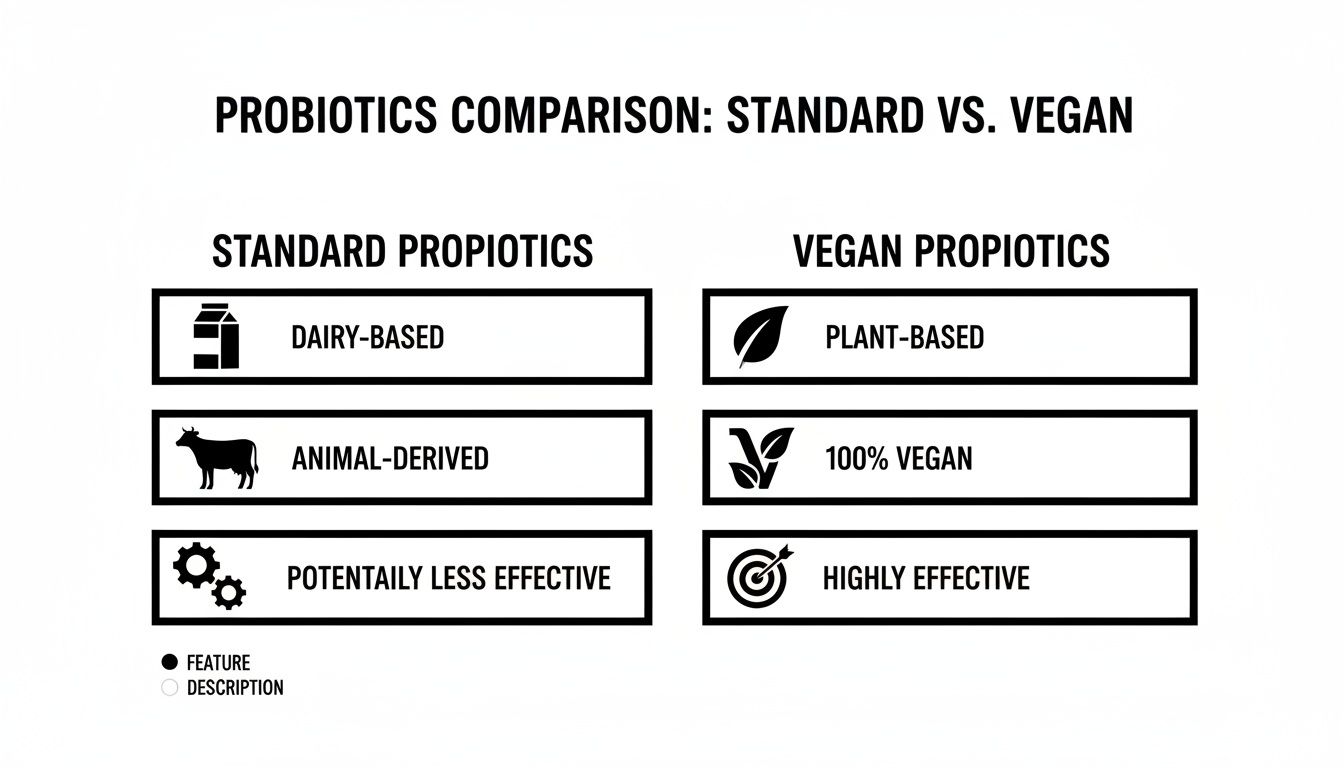
As you can see, vegan probiotics are all about plant-based sourcing and thoughtful formulation, whereas standard options often rely on dairy and animal-derived ingredients that just don't fit the bill.
Demystifying Colony Forming Units
The first thing most people notice is the Colony Forming Unit (CFU) count, often in the billions. CFU represents the number of live, viable microbes capable of multiplying and forming colonies in your gut. But while a huge number looks impressive, more isn't automatically better.
Efficacy is strain-specific. Some strains get the job done at 5 billion CFU, while others might need 20 billion CFU or more. Instead of just chasing the highest number, look for a product that provides a clinically relevant dose for its specific strains. This shows the formula is based on evidence, not just big numbers.
Understanding Probiotic Strain Names
Beyond the CFU count, the specific strains are what truly define a probiotic's function. A good probiotic label will always list the full three-part name for each microbe: genus, species, and the all-important strain designation.
For example, Lactobacillus acidophilus CL1285:
- Genus: Lactobacillus
- Species: acidophilus
- Strain: CL1285
That strain designation (like CL1285) is everything. Different strains within the same species can have completely different effects on your body. Think of it like knowing you have a dog (genus Canis), but not knowing if it’s a tiny Chihuahua or a massive Great Dane. Reputable brands always list the specific strains—it's a hallmark of a high-quality, transparent product.
A probiotic without specific strain names is a major red flag. It points to a generic, unverified formula that likely lacks the targeted benefits you’re looking for to support your vegan diet.
For vegans, certain strains are particularly beneficial. High-fiber diets demand microbes that excel at breaking down complex plant carbohydrates. This table breaks down some of the most effective, vegan-friendly strains to help you match a supplement to your wellness goals.
Comparing Probiotic Strains for Vegan Health Goals
| Probiotic Strain | Key Benefit for Vegans | Ideal for Addressing | Vegan Sourcing |
|---|---|---|---|
| Bifidobacterium lactis | A powerhouse for digestive comfort and regularity. | Bloating, gas, and irregular bowel movements often associated with high-fiber diets. | Fermented from plant-based cultures like soy or other non-dairy mediums. |
| Lactobacillus plantarum | Named for its prevalence in fermented plant foods, it's a champion at digesting plant matter. | Difficulty digesting complex carbohydrates found in legumes, grains, and vegetables. | Commonly found in sauerkraut, kimchi, and sourdough; cultured on vegan media. |
| Lactobacillus rhamnosus | Renowned for its ability to support immune function. | A weakened immune system, as it strengthens the gut barrier. Around 70% of immunity resides in the gut. | Cultivated in dairy-free, plant-derived environments to ensure it's fully vegan. |
| Saccharomyces boulardii | A beneficial yeast that helps restore gut flora balance, especially after disruptions. | Traveler's diarrhea, antibiotic-associated gut issues, or general gut imbalance. | A yeast strain that is inherently vegan and not derived from animal sources. |
Matching the right strain to your needs is the most critical step. If digestive comfort is your goal, B. lactis is a great starting point. If you want to bolster your immune defenses, L. rhamnosus is the strain to look for.
The Importance of Delivery and Synergy
How a probiotic gets to your gut is just as important as what's in it. Your stomach is a highly acidic environment designed to destroy bacteria—great for fighting pathogens, but a major hurdle for delicate probiotics.
Look for features that protect these live cultures on their journey:
- Delayed-Release Capsules: These special capsules are coated to withstand stomach acid. They dissolve in the more neutral environment of the intestines, ensuring the microbes arrive alive and ready to get to work.
- Shelf-Stability: This means the product doesn't need refrigeration and is formulated to maintain its potency right up to its expiration date. A "CFU at time of expiration" guarantee is the gold standard here.
Finally, the best vegan probiotics often include prebiotics. Prebiotics are specific types of dietary fiber—like inulin or Fructooligosaccharides (FOS)—that act as food for your good gut bacteria. Including them creates a synergistic effect, helping the probiotics thrive and colonize your gut more effectively. Always check the "Other Ingredients" list for these valuable additions and to confirm the absence of non-vegan fillers like lactose or animal-based magnesium stearate.
Matching Strains to Your Health Goals
When it comes to probiotics, "one-size-fits-all" just doesn't cut it. The real magic happens when you start matching specific microbial allies to your personal health goals. A generic formula might give you a little boost, but a targeted approach means you're investing in a supplement that’s truly built to tackle your unique needs—whether that's calming digestive chaos, reinforcing your immune defenses, or optimizing athletic recovery.
This push for specialized solutions is reshaping the entire market. In fact, the vegan probiotics sector is seeing incredible growth, with global sales expected to hit USD 6,447.9 million by 2025. It’s a clear sign that health-savvy consumers on plant-based diets want targeted support, driving the market toward a predicted USD 15,546.9 million by 2035. You can learn more about these impressive vegan market projections to see where the industry is heading. It’s all moving toward personalized gut health.
For Digestive Harmony and Beating the Bloat
If you're on a high-fiber vegan diet, you might be familiar with the occasional digestive rebellion. Gas, bloating, and irregularity are common hiccups as your gut learns to break down all those complex plant carbohydrates. To win this battle, you need probiotic strains that are masters of fiber fermentation.
The best probiotics for vegans facing this challenge will be packed with strains known for producing the enzymes needed to dismantle tough plant matter.
- Bifidobacterium lactis: Think of this strain as a powerhouse for promoting regularity and calming the bloat. It’s brilliant at maintaining balance in the colon, which is ground zero for fiber digestion.
- Lactobacillus plantarum: The name says it all—this microbe thrives on plants. It’s exceptionally good at breaking down complex carbs and has been shown to ease common digestive complaints like gas.
Choosing a probiotic rich in these strains is like giving your gut the right tools for the job, helping it process a plant-based diet smoothly for greater comfort and consistency. This is a fundamental part of maintaining a happy gut, and you can dive deeper with our guide on the best probiotics for gut health.
For a Stronger Immune System
Did you know that roughly 70% of your immune system is located in your gut? That makes a balanced microbiome your absolute first line of defense. Certain probiotic strains are known to modulate immune responses, helping your body fight off pathogens more effectively and keeping you healthy year-round.
If immune support is your top priority, seek out formulas with strains that have been clinically studied for their immune-boosting effects. These microbes work by strengthening the gut barrier, which stops harmful bacteria from getting into your bloodstream, and by encouraging the production of protective antibodies.
Key Insight: Your gut is essentially the command center for your immune system. Adding specific probiotic strains is like sending your internal defense team to an elite training camp—they come back stronger and more responsive.
Here are the key players for immune function:
- Lactobacillus rhamnosus: This is one of the most heavily researched strains for immunity. It’s famous for its ability to cling to the intestinal walls, reinforcing your gut’s defenses and promoting a healthy inflammatory response.
- Lactobacillus acidophilus: A true classic, L. acidophilus helps maintain a healthy pH balance in the gut. This creates an environment where it's much harder for harmful bacteria to thrive.
For Athletes and Active Lifestyles
Vegan athletes put incredible demands on their bodies. To perform and recover, they need to squeeze every last nutrient out of their food. The right probiotic can be a total game-changer, supporting everything from energy production to calming post-workout inflammation.
For anyone leading an active life, the focus shifts to strains that boost nutrient absorption and speed up muscle recovery. A healthy gut ensures the protein, vitamins, and minerals from your plant-based diet are actually being put to good use.
- Enhanced Nutrient Bioavailability: Certain strains are pros at breaking down plant compounds like phytates, which can otherwise block mineral absorption. This means you get more bang for your buck from every meal.
- Reduced Inflammation: Intense exercise naturally causes some inflammation. Strains like Bifidobacterium lactis have been shown to help manage this response, which can lead to faster recovery times.
- Improved Energy Metabolism: Probiotics also have a hand in producing B vitamins, which are absolutely essential for turning the food you eat into usable energy.
By strategically matching well-researched strains to your health goals, you graduate from generic supplementation to a truly effective wellness strategy. This makes your probiotic a powerful and reliable partner on your vegan health journey.
Getting the Most from Your Probiotic
So, you’ve picked out a great vegan probiotic. That's a fantastic first step. But to really see the kind of results you’re looking for, you need to think about how you integrate it into your life. It’s not just about popping a capsule; it's about timing, consistency, and even how you store the bottle.
Think of it this way: your probiotic is a team of specialists ready to get to work in your gut. Your job is to make sure they get there safely and have everything they need to thrive once they arrive. A few simple habits can make all the difference.
Creating the Ideal Environment for Success
That journey from the capsule to your colon is a dangerous one for these delicate microbes. Their biggest enemy? Stomach acid. This is why when you take your dose can have a huge impact on how many bacteria survive to do their job.
While the advice can vary, a good rule of thumb is to take your probiotic about 20-30 minutes before a meal, or with a light meal. Food acts as a buffer, lowering the acidity in your stomach and creating a much safer passage for the bacteria. The main thing to avoid is taking it on a totally empty stomach, which is when acid levels are at their peak.
Consistency is just as important. Probiotics are more like temporary visitors than permanent residents in your gut. To keep that healthy balance tipped in your favor, you need to replenish these beneficial populations every single day. Make it a non-negotiable part of your routine.
The Power of Prebiotic Foods
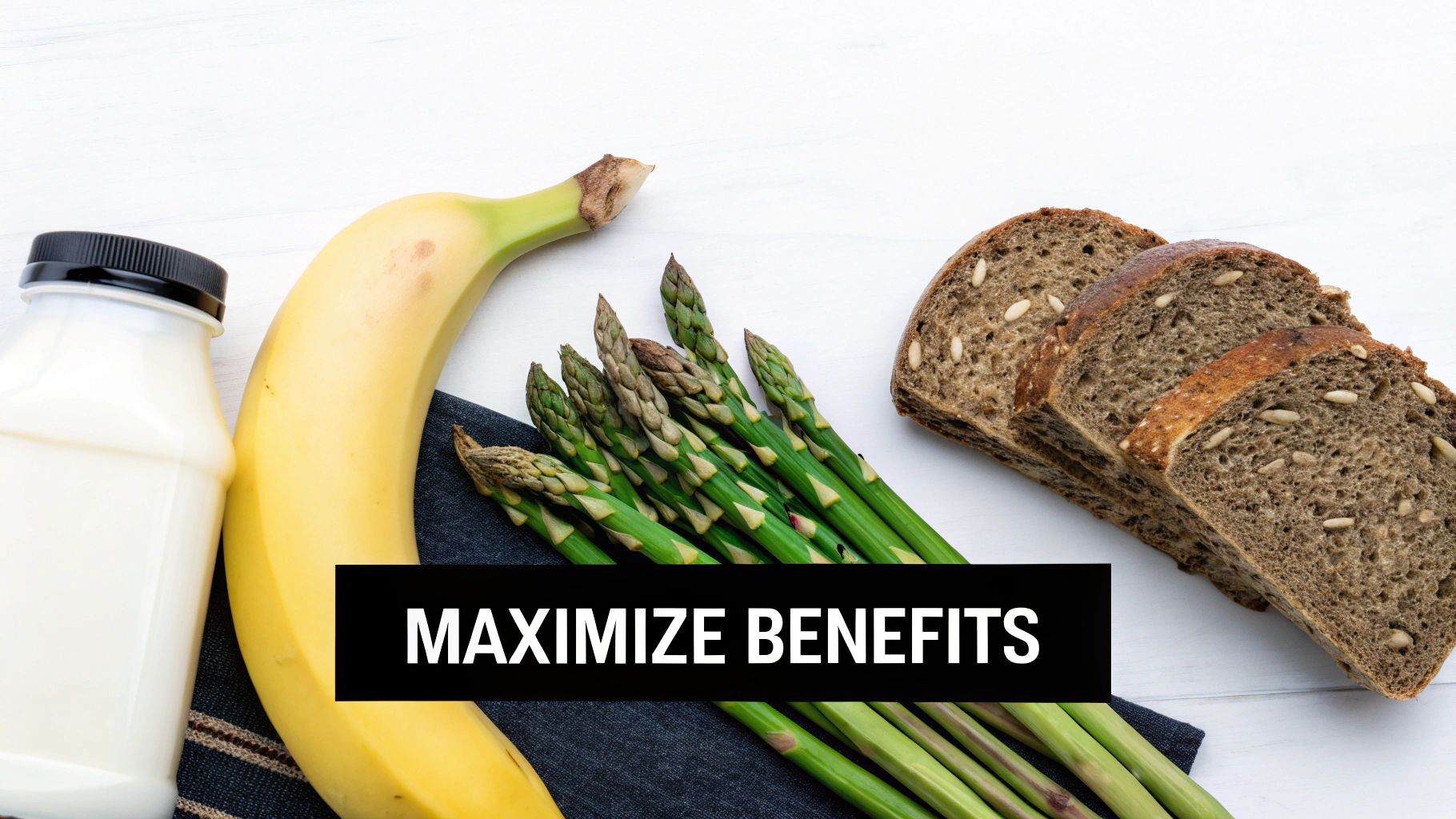
Your new probiotic colonies need fuel to really flourish, and that’s where prebiotics come into play. Prebiotics are specific types of indigestible fiber that act as the preferred food for your good gut bacteria. When you start adding prebiotic-rich foods to your vegan diet, you create a powerful symbiotic relationship that amplifies the benefits of your supplement.
A probiotic supplement introduces the beneficial bacteria; a prebiotic-rich diet ensures they have the nourishment to multiply, colonize, and transform your gut microbiome for the better.
Here are some excellent vegan prebiotic sources you can easily add to your meals:
- Vegetables: Onions, garlic, leeks, asparagus, and Jerusalem artichokes are loaded with prebiotic fibers like inulin.
- Fruits: Slightly under-ripe bananas and apples are great sources of pectin and resistant starch that feed good microbes.
- Whole Grains: Oats, barley, and whole wheat offer beta-glucans and other beneficial fibers.
- Legumes: Chickpeas, lentils, and beans are fantastic sources of galactooligosaccharides (GOS).
By eating these foods regularly, you’re not just feeding yourself—you’re actively cultivating a thriving internal garden. For anyone looking to take their gut support to the next level, exploring a high-quality selection of probiotics and digestive enzymes can offer even more comprehensive support.
Proper Storage and What to Expect
Finally, you need to protect your investment with proper storage. Heat, moisture, and light are the enemies of live probiotic cultures, quickly reducing their potency. Most shelf-stable formulas should be kept in a cool, dry place away from sunlight, like a kitchen cabinet—definitely not the bathroom, where humidity is always fluctuating.
When you first start taking a probiotic, don't be surprised if you notice a few temporary changes in your digestion, like a bit of gas or bloating. This is usually a good sign! It means the new bacteria are getting to work and rebalancing your microbiome. These effects typically fade within a week or two as your body finds its new, healthier equilibrium.
Common Questions About Vegan Probiotics
When you're diving into the world of supplements, a few questions are bound to pop up. This is especially true for something as specific as vegan probiotics, where getting clear answers is essential. Understanding how long they take to work, whether food is enough, and what to expect when you start can help you set realistic goals for your long-term gut health.
Getting these questions sorted out empowers you to make confident choices on your wellness journey. Let’s tackle some of the most common ones people have when starting a new vegan probiotic.
How Long Does It Take for Vegan Probiotics to Work?
This is probably the number one question we hear. While everyone's gut microbiome is different, most people begin to notice initial improvements in digestion within the first 2 to 4 weeks of consistent, daily use. You might experience things like less bloating or more regularity.
For the more significant, deeper benefits—like a stronger immune response or a major shift in your gut balance—it’s best to be patient. These kinds of changes often take anywhere from 1 to 3 months to really take hold as the good bacteria colonize and create a healthier new normal in your gut.
Can I Get Enough Probiotics from Vegan Food Alone?
Fermented vegan foods are absolutely fantastic for your diet. Things like sauerkraut, kimchi, kombucha, and plant-based yogurts are great for maintaining general gut health because they introduce beneficial bacteria. However, trying to rely on them alone for specific health outcomes can be tough.
While fermented foods are great for supporting your gut, a targeted supplement is the only way to guarantee a consistent, powerful dose of specific strains that have been researched for particular goals, like boosting nutrient absorption or strengthening immunity.
A high-quality vegan probiotic supplement delivers a concentrated dose of microbes in the billions—far more than you’d get from a typical serving of fermented food. This makes supplements a much more reliable tool if you're serious about rebalancing your microbiome.
Are There Any Side Effects to Taking Vegan Probiotics?
When you first introduce a powerful new probiotic, you might notice some mild, temporary side effects. A bit of gas, bloating, or a change in your bowel movements are the most common.
Believe it or not, this is usually a good sign! It means the new beneficial bacteria are actively getting to work and remodeling your gut environment, which can stir things up a bit. This adjustment phase, sometimes called a "die-off" period, typically goes away within the first week or two. To make it easier on your system, you can start with half a dose for a few days before moving up to the full recommended amount. If symptoms stick around, it's always smart to check in with your healthcare provider.
At MySuperFoodRx, we're committed to providing high-purity, targeted supplements that support your plant-based lifestyle. Our custom-formulated probiotics are designed with carefully selected vegan strains to help you achieve optimal gut health and overall wellness. Discover our full range of vegan-friendly supplements.


