


The best supplements for vegans zero in on the specific nutritional gaps that can pop up on a plant-based diet. The most critical players here are Vitamin B12, Vitamin D, and algae-based Omega-3s (EPA/DHA).
Even though a well-planned vegan diet is bursting with nutrients, these three are either totally absent from plants or just really tough to get enough of. This is why smart supplementation isn't just a good idea—it's a cornerstone of long-term health.
Why Smart Supplementation Is Essential for Vegan Health
Choosing a vegan lifestyle is an incredible move for your health, but it does ask for a more strategic game plan when it comes to nutrition.
Think of supplementation less like a patch for a leaky diet and more like essential nutrient insurance. Even the most colorful, well-thought-out vegan meals can come up short on a few key nutrients that are simply harder to find or absorb from the plant kingdom.
This isn't a knock against the diet itself; it's just a biological reality. The goal is to shift from just surviving on a vegan diet to truly thriving. With the right supplements, you're giving your body all the tools it needs for great energy, a rock-solid immune system, and lasting wellness.
Understanding Nutrient Gaps
A whole-foods vegan diet is a powerhouse of fiber, vitamins, and antioxidants. Still, some nutrients are either found almost exclusively in animal products or are in a form that's harder for our bodies to use from plant sources.
The most common gaps include:
- Vitamin B12: This one is a biggie. B12 is made by microorganisms, not plants, so supplementation is non-negotiable for vegans. It’s absolutely vital for healthy nerves and creating red blood cells.
- Vitamin D: Often called the "sunshine vitamin," most people (vegan or not) are running low. It's crucial for absorbing calcium for strong bones and keeping your immune system in fighting shape.
- Omega-3s (EPA/DHA): While foods like flax and chia seeds give us ALA (another omega-3), our bodies are notoriously bad at converting it into the essential EPA and DHA forms. These are the ones that do the heavy lifting for brain and heart health.
- Iron: Plants provide non-heme iron, which our bodies don't absorb as easily as the heme iron found in animal products.
Before we dive deeper, here’s a quick-glance table to summarize the most important nutrients to keep on your radar.
Your Quick Guide to Essential Vegan Supplements
This table breaks down the most critical supplements for anyone following a plant-based diet, explaining why each one matters and where you can find them in food form.
| Nutrient | Why It's Important for Vegans | Key Plant-Based Food Sources |
|---|---|---|
| Vitamin B12 | Not naturally found in plant foods. Essential for nerve function and red blood cell production. Supplementation is a must. | Fortified foods (nutritional yeast, plant milks, cereals), but supplements are the most reliable source. |
| Vitamin D | Crucial for calcium absorption, bone health, and immune function. Many people are deficient, regardless of diet. | Fortified foods, mushrooms exposed to UV light, and sunlight. Supplements are often necessary. |
| Omega-3s (EPA/DHA) | Important for brain, heart, and eye health. Plant-based ALA conversion to EPA/DHA is very inefficient. | Algae oil supplements are the only direct plant-based source. Flaxseeds, chia seeds, and walnuts provide ALA. |
| Iron | Plant-based (non-heme) iron is harder to absorb. Important for energy and oxygen transport in the blood. | Lentils, chickpeas, tofu, spinach, and fortified cereals. Pair with Vitamin C to boost absorption. |
| Calcium | Essential for bone and tooth health. Can be obtained from plants, but intake needs to be consistent. | Fortified plant milks, tofu, kale, collard greens, and broccoli. |
| Iodine | Critical for thyroid function and metabolism. Soil levels can be inconsistent, affecting plant content. | Iodized salt, sea vegetables (like kelp or nori). |
| Zinc | Important for immune function and wound healing. Plant-based zinc is less bioavailable due to phytates. | Legumes, nuts, seeds, and whole grains. Soaking or sprouting can improve absorption. |
Remember, while food should always come first, supplements act as a reliable safety net to ensure you're not missing out on these vital nutrients.
Supplementation is about proactively filling these known gaps to prevent deficiencies before they arise, allowing you to enjoy all the benefits of a plant-based lifestyle without compromise. A strong nutritional foundation is also key to building resilience; check out our guide on how to strengthen your immune system naturally.
The Growing Vegan Supplement Market
If you're looking for vegan supplements, you're in good company. This mindful approach to health has sparked a huge shift in the market. The global vegan supplements industry was recently valued at over $8.5 billion and is expected to keep growing, which shows just how many people are committed to plant-based wellness. You can dig into more of these market insights on polarismarketresearch.com.
What does this growth mean for you? More choices and better quality than ever before. It's now much easier to find effective, clean, and ethically sourced supplements designed specifically for your needs, so you can support your health with total confidence.
The Three Non-Negotiable Supplements for Every Vegan
Even a perfectly planned vegan diet has a few blind spots. Some key nutrients are either completely missing from plants or incredibly hard for our bodies to get in the right amounts. Think of these three as the absolute foundation of your supplement routine—the non-negotiables for feeling your best long-term. If you get these right, you've covered your most critical bases.
It’s no surprise that vitamins make up the biggest slice of the vegan supplement market, accounting for over 32% of total revenue. This trend highlights just how aware people are of a few crucial gaps, especially when it comes to vitamin B12 and vitamin D3.
Vitamin B12: The Essential Spark Plug
Let's be crystal clear: Vitamin B12 is the one supplement every single vegan needs to take. No exceptions. It's not made by plants or animals but by tiny microorganisms in the soil. Because our modern food system is so squeaky clean, we can no longer count on getting it from trace amounts on produce.
Think of B12 as the spark plug for your nervous system and your energy levels. It's vital for building healthy red blood cells that shuttle oxygen everywhere it needs to go, and it protects the delicate insulation around your nerve cells. A shortfall isn't just a minor issue; it can lead to permanent nerve damage, crushing fatigue, and anemia.
- Why You Can't Get It From Food: While some foods like nutritional yeast and plant milks are fortified with B12, trying to hit your daily target from these alone is a risky guessing game. A dedicated supplement is the only reliable way to know you're covered.
- Recommended Dose: A common approach is taking 25-100 mcg daily. Another popular method is a larger dose of 1,000-2,500 mcg once or twice a week.
- Supplement Forms: You’ll mostly see two forms: cyanocobalamin, which is incredibly stable and well-studied, and methylcobalamin, a more "active" form. Both get the job done, so it often comes down to personal preference.
Vitamin D: The Sunshine Nutrient
Vitamin D really acts more like a hormone than a vitamin, and it's a major player in everything from calcium absorption and immune defense to mood regulation. Our bodies are designed to make it when sunlight hits our skin, but let's be realistic. Modern indoor lifestyles, sunscreen, and where you live on the planet make it nearly impossible for most of us—vegan or not—to get enough sun year-round.
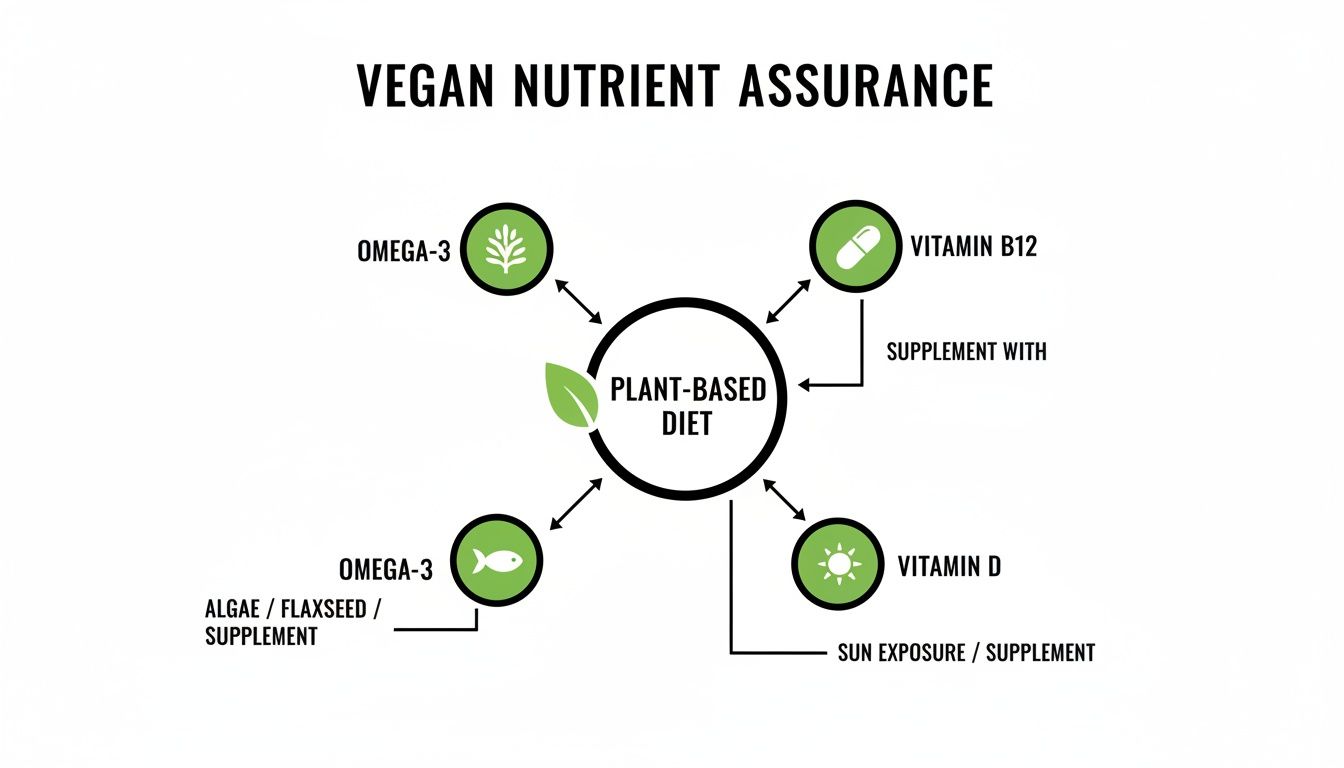
This just drives the point home: even with a stellar diet, you need to plug these specific, unavoidable gaps with targeted supplements like B12, D, and Omega-3s.
Without enough Vitamin D, your body can’t properly absorb the calcium from your diet, no matter how much you consume. This makes supplementation a critical component of maintaining strong bones and a resilient immune system.
The most effective form you can take is Vitamin D3. For a long time, this was sourced from lanolin (sheep's wool), but thankfully, high-quality vegan D3 made from lichen is now easy to find and works just as well. You can explore great options like our vegan MySuperFoodRx Vitamin D3 Capsules to make sure you're meeting your daily needs.
- Recommended Dose: Everyone is a bit different, but a general guideline is 1,000-2,000 IU (25-50 mcg) daily. The absolute best way to dial in your personal dose is to get a simple blood test from your doctor.
Algae-Based Omega-3s: Fuel for Your Brain
Omega-3 fatty acids are famous for their powerful anti-inflammatory benefits and their critical role in keeping our brain and heart healthy. There are three main types you hear about: ALA, EPA, and DHA. Plant foods like flax, chia, and walnuts are loaded with ALA (alpha-linolenic acid), but that's not the full picture.
Your body primarily needs EPA (eicosapentaenoic acid) and DHA (docosahexaenoic acid) to do the real heavy lifting for brain and heart health. Here's the catch: the process of converting ALA into EPA and DHA is notoriously inefficient, often with a success rate of less than 5%. It's like trying to build a house with only a tiny fraction of the blueprints.
This is where algae oil completely changes the game for vegans. Fish are rich in EPA and DHA for one simple reason—they eat algae. By going straight to the source, an algae-based supplement gives you these crucial fats directly, no inefficient conversion process needed. It's the only reliable way for vegans to get a direct dose of the omega-3s their bodies are truly craving for optimal brain function and cardiovascular support.
Essential Minerals That Vegans Should Monitor
Beyond the big-name vitamins, a few key minerals need a little extra attention when you're eating plant-based. While vegetables and legumes are packed with these nutrients, their usability often comes with a catch. This is where we need to talk about bioavailability.
Think of it like this: you have a key, but it doesn't quite fit the lock. You might have to jiggle it around or have a special technique to get the door open. That's bioavailability in a nutshell. Minerals from plants often come bundled with compounds that make them harder for our bodies to grab onto and use, so we need some smart strategies to get the most out of them.
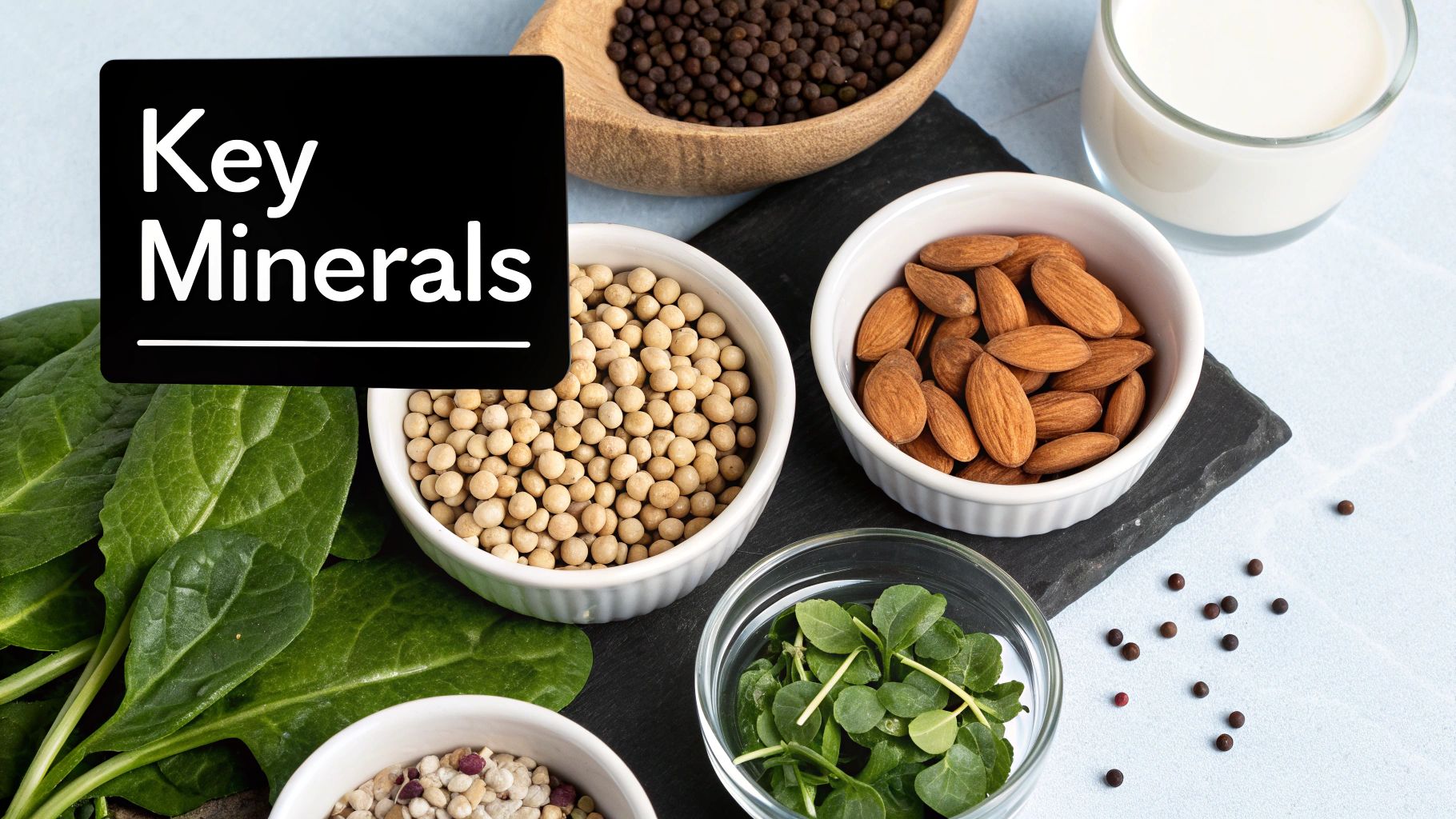
Iron: Your Energy Transporter
Iron is the absolute workhorse of minerals. It's in charge of making hemoglobin, the protein in your red blood cells that taxis oxygen from your lungs to every single part of your body. When you're low on iron, you'll feel it—fatigue, weakness, and mental fog are common signs that your cells are literally starved for oxygen.
The challenge for vegans comes down to the type of iron in plants. Plant foods contain non-heme iron, which is much less bioavailable than the heme iron found in animal products. Its absorption can get blocked by compounds called phytates, which are naturally present in grains, beans, and seeds.
But don't worry, you can easily outsmart this. The simplest trick is pairing your iron-rich foods with a source of vitamin C, which can dramatically boost uptake.
- Top Plant-Based Sources: Lentils, chickpeas, tofu, spinach, fortified cereals, and pumpkin seeds.
- Absorption Tip: Squeeze lemon juice over your lentil soup, toss bell peppers into your tofu scramble, or enjoy a side of broccoli with your beans.
Calcium: For More Than Just Strong Bones
We all know calcium is the star player for building and maintaining strong bones and teeth. But its job doesn't end there. It’s also crucial for muscle function, nerve signaling, and keeping your heart beating in a steady rhythm.
While plenty of leafy greens and fortified foods are great calcium sources, their calcium can sometimes be locked up by oxalates, another compound that gets in the way of absorption. Spinach, for example, is technically high in calcium, but its high oxalate content means you absorb very little of it.
To make sure you're getting enough, you'll want to focus on low-oxalate, high-calcium plant foods.
Vegans really need to be intentional about calcium. A varied diet of fortified foods and low-oxalate greens is your foundation, but supplementation can be a reliable backup plan to protect your bone density for the long haul.
- Excellent Plant-Based Sources: Fortified plant milks (like soy or almond), calcium-set tofu, kale, collard greens, and broccoli.
- Supplementation: If you find it tough to consistently hit your calcium goals through diet alone, a supplement is a wise choice. Look for easily absorbed forms like calcium citrate.
Iodine: The Metabolism Regulator
Iodine is a trace mineral that is absolutely non-negotiable for a healthy thyroid. Your thyroid gland uses iodine to produce hormones that control your metabolism, influencing everything from your heart rate and body temperature to your overall energy levels.
Here's the tricky part: the iodine content in plant foods is all over the map because it completely depends on the soil they were grown in. If the soil is poor in iodine, the crops will be, too, making plants an unreliable source.
For that reason, relying solely on plant foods for your iodine intake is a bit of a gamble.
- Reliable Plant-Based Sources: The most dependable options are iodized salt and sea vegetables like kelp, nori, and dulse. Be careful with seaweed, though—the amount can vary wildly, and some types contain excessive levels.
- Supplementation Strategy: Using iodized salt is a simple fix. If you avoid salt, a low-dose supplement providing around 150 mcg daily is a safe and effective way to ensure you're covered without going overboard. For more targeted support, you can explore a wide range of mineral supplements tailored to your needs.
Zinc: The Immune Defender
Think of zinc as a powerhouse mineral involved in hundreds of processes in your body, from immune function and wound healing to cell growth. It’s your body's frontline defender, helping your immune system fight off invading bacteria and viruses.
Just like non-heme iron, the bioavailability of zinc from plants often takes a hit from those pesky phytates. So, while many plant foods are rich in zinc, you might not be absorbing as much as you think.
Fortunately, some simple food prep techniques can help break down phytates and give absorption a real boost. Soaking, sprouting, or fermenting your beans, grains, and seeds can make a huge difference.
- Key Plant-Based Sources: Legumes (chickpeas, lentils), nuts, seeds (especially pumpkin and hemp seeds), and whole grains.
- Absorption Trick: Choosing sprouted grain bread or soaking your beans overnight before you cook them are easy wins to increase how much zinc your body can actually use.
Beyond the Basics: Fine-Tuning Your Vegan Health
Once you've got your foundation covered with the essentials, it's time to start thinking about the next level. This is where we move from just meeting your needs to actively optimizing your health for whatever life throws at you.
Think of it like this: your diet is the fuel, and the essential supplements are the oil. Now, we're talking about the high-performance upgrades—the tweaks that help your engine run smoother, stronger, and cleaner. We'll dive into some potent superfoods and gut-health allies that can truly elevate your plant-based journey.
Chlorella and Spirulina: Detox and Micronutrient Powerhouses
Chlorella and spirulina are two types of freshwater algae that have more than earned their superfood reputation. They are incredibly dense in micronutrients, offering a concentrated blast of vitamins, minerals, and antioxidants that’s tough to replicate with diet alone. But they're more than just a multivitamin from the sea; they also play a huge role in supporting your body's natural cleansing processes.
Chlorella is especially well-known for its unique ability to bind with heavy metals and other unwanted toxins, helping to gently guide them out of your system. Spirulina is the perfect partner, delivering a powerful antioxidant punch and a surprisingly high amount of plant-based protein.
- Chlorella: Often called the "king of detox," its power comes from its tough outer cell wall. To make sure you can actually absorb all the goodness inside, always look for "cracked cell wall" chlorella on the label.
- Spirulina: This blue-green algae is loaded with phycocyanin, a potent antioxidant that helps protect your cells from damage and supports a healthy inflammatory response.
Together, they're a dynamic duo for your cells, offering a one-two punch of deep nourishment and detoxification.
Probiotics and Digestive Enzymes: Your Gut's Best Friends
You can eat the most nutrient-dense food on the planet, but if your gut isn't working right, you're not getting the full benefit. This is where probiotics and digestive enzymes step in. A healthy gut is the cornerstone of a strong immune system and is absolutely critical for absorbing nutrients efficiently.
Probiotics are the "good guys"—the beneficial bacteria that live in your gut. They help keep your microbiome in balance, which affects everything from your digestion to your mood. While a fiber-rich vegan diet is fantastic fuel for these microbes, a targeted probiotic supplement can help ensure your gut community is diverse and thriving.
Digestive enzymes, on the other hand, are like tiny helpers that break down your food into smaller, usable parts. Your body makes its own, but supplementing can be a game-changer for vegans who eat a lot of high-fiber foods like beans and cruciferous veggies. It can help reduce that all-too-familiar bloating and gas, making sure you get maximum value from every single meal.
A happy gut is the gateway to unlocking the full potential of your plant-based diet. When you optimize digestion and absorption, you turn the food you eat into the energy and vitality you feel.
The vegan supplement world has come a long way. Major brands like Garden of Life and Sunwarrior are now investing heavily in high-quality, plant-based formulas and algae-derived nutrients. This healthy competition has pushed innovation forward, giving us more effective options than ever. For a deeper look into this growing market, you can find more insights from the IMARC Group.
Matching Supplements to Your Wellness Goals
Building your own routine is all about connecting these advanced nutrients to what you want to accomplish. Are you an athlete laser-focused on recovery? Or is your main goal to bulletproof your immune system during a stressful time of year?
To help you get started, the table below offers a simple way to match specific vegan supplements to your personal health goals. Think of it as a starting point for creating a plan that truly works for you.
| If Your Goal Is | Consider This Supplement | How It Helps |
|---|---|---|
| Enhanced Detox Support | Chlorella | Binds to heavy metals and toxins, helping to remove them from the body while providing a rich source of chlorophyll. |
| Immune System Resilience | Probiotics | Supports a healthy gut microbiome, which is central to immune function, helping to regulate immune responses. |
| Athletic Recovery | Spirulina | Delivers antioxidants to combat exercise-induced oxidative stress and provides protein for muscle repair. |
| Improved Digestion | Digestive Enzymes | Helps break down fiber, protein, and fats more efficiently, reducing bloating and improving nutrient absorption. |
| Overall Nutrient Density | Chlorella/Spirulina Blend | Offers a broad spectrum of vitamins, minerals, antioxidants, and protein to fill any small nutritional gaps. |
By strategically adding these supplements to your toolkit, you can build a robust routine that goes beyond just preventing deficiencies. You’ll be actively promoting a higher level of wellness, helping you feel your absolute best on your vegan journey.
How to Choose High-Quality Vegan Supplements
Walking down the supplement aisle can be completely overwhelming, but finding the right vegan supplements doesn't have to feel like a guessing game. Once you learn what to look for, you can pick up a bottle, read the label with confidence, and make a choice that truly supports your health.
Think of a supplement label just like a food label—it tells a story. It reveals the product's quality, purity, and whether it's actually going to work. The goal is to become a savvy shopper who can instantly spot the difference between a high-impact formula and one that's just full of empty promises.
Look for Third-Party Testing and Certifications
The first thing your eyes should scan for is proof of quality from an independent source. The supplement industry isn't regulated as tightly as pharmaceuticals, which means certifications are your best friend. They're the clearest sign that what's on the label is actually inside the bottle.
Honestly, this kind of verification is non-negotiable for safety and trust.
- GMP (Good Manufacturing Practices): This is the baseline. It’s a fundamental certification that ensures the product was made in a clean, controlled facility, guaranteeing consistency and quality control from start to finish.
- Third-Party Lab Testing: The best brands send their products to independent labs to test for purity and potency. This process checks for nasty contaminants like heavy metals and confirms the dose of the active ingredient is accurate. No shortcuts.
- USDA Organic & Non-GMO Project Verified: These seals are especially important for a clean, plant-based lifestyle. They confirm that the ingredients were grown without synthetic pesticides or genetically modified organisms.
A brand that goes the extra mile to get third-party testing is showing you they believe in their product. It's a sign of transparency—they have nothing to hide and stand behind their quality. That’s exactly what you want when you're choosing something to put in your body.
Scrutinize the Ingredient List
Beyond the big certifications, the "Other Ingredients" section on a label is where the truth really comes out. A genuinely high-quality vegan supplement should have a short, clean list, totally free from weird additives that do nothing for your health.
You have to watch out for common fillers and unnecessary extras. They can dilute the product’s effectiveness and sometimes even cause digestive issues.
- Artificial Colors and Sweeteners: Keep an eye out for things like sucralose, aspartame, or Red No. 40. You don't need them.
- Fillers and Binders: Steer clear of magnesium stearate, titanium dioxide, and hydrogenated oils. These are just cheap additives.
- Common Allergens: If you have sensitivities, look for labels that are explicitly free from gluten, soy, and dairy.
Prioritize Bioavailability and Sourcing
At the end of the day, a supplement is only as good as your body's ability to absorb and use it. This is called bioavailability—it's the measure of how much of a nutrient actually makes it into your system. For instance, micronized powders, like the ones we use in our MySuperFoodRx formulas, have a much smaller particle size, which helps your body absorb them better.
Sourcing also tells you a lot. Knowing where the ingredients come from, like our chlorella that’s sustainably grown in Taiwan, adds a huge layer of trust. When a brand is open and honest about its supply chain, it shows a deep commitment to quality that starts from the ground up. Choosing wisely means investing in supplements that deliver real, noticeable results.
Sample Daily Supplement Plans for Vegans
Theory is great, but let's be honest—it's putting that knowledge into practice that really counts. To help you connect all the dots, I’ve put together three sample daily supplement routines designed for different vegan lifestyles. Think of these as flexible starting points. You can (and should!) tweak the doses and products based on your own blood work, energy levels, and personal health goals.
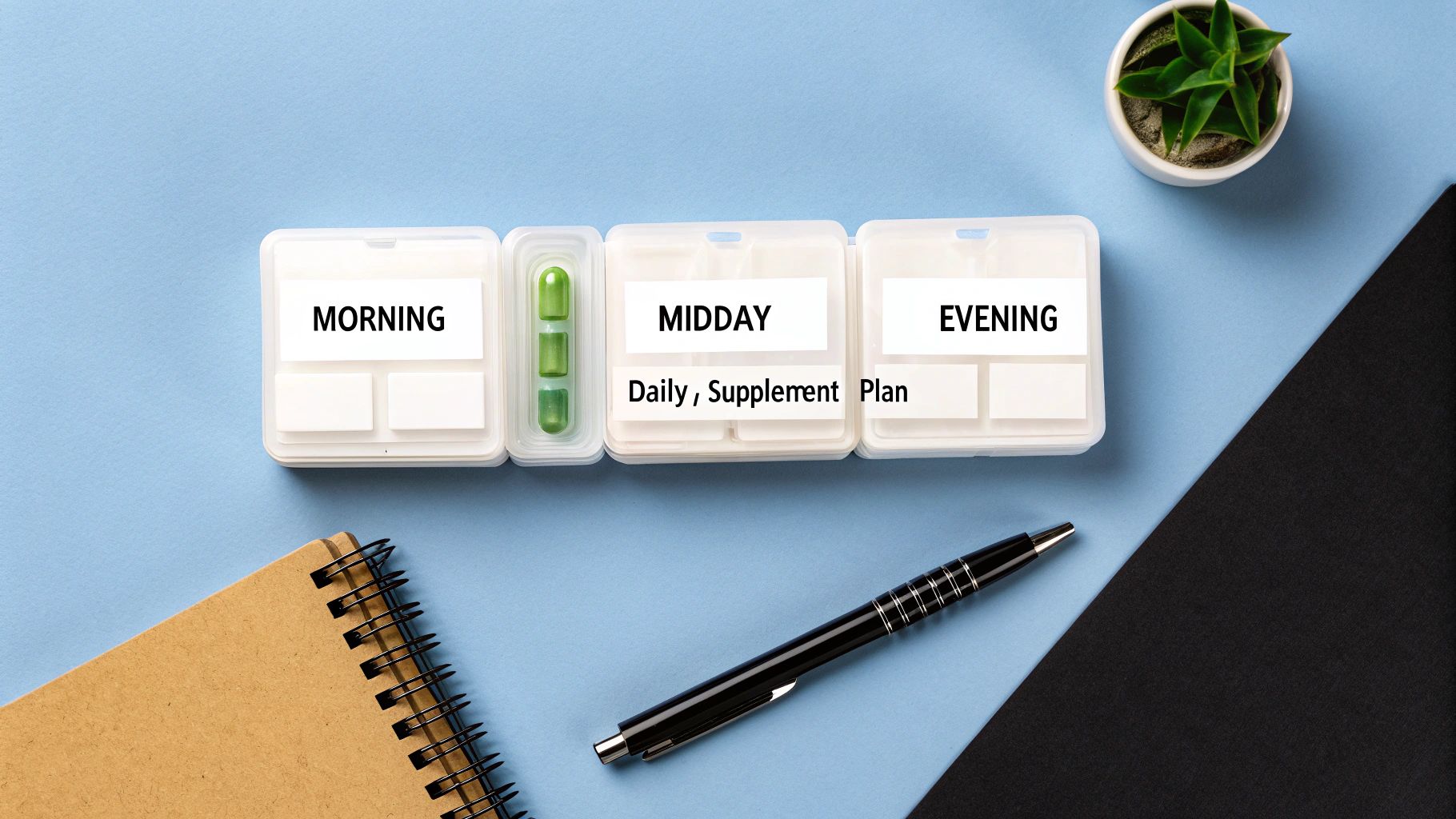
These plans are here to make supplementing feel simple and actionable. Just remember one golden rule: unless the label says otherwise, always take your supplements with food. This little habit boosts absorption and helps sidestep any potential stomach upset.
The Everyday Vegan Wellness Plan
This foundational plan is all about covering your core nutritional bases for long-term health, energy, and feeling your best day-to-day. It’s the perfect starting point for most vegans.
-
Morning (with breakfast):
- Vitamin B12 (100 mcg): Kick off your day by checking this non-negotiable nutrient off your list for energy metabolism.
- Vitamin D3 (2,000 IU): Be sure to take this with a source of healthy fat in your breakfast to maximize its absorption.
- Algae Omega-3 (250-500 mg EPA/DHA): This helps support your brain health and keep inflammation in check right from the start of your day.
-
Evening (with dinner):
- Calcium/Magnesium (500 mg/250 mg): Taking this combination before bed not only supports bone health but can also promote a sense of calm and relaxation.
The Vegan Athlete Recovery Protocol
This routine is built for anyone who is active and pushing their body. It puts a laser focus on energy production, muscle repair, and dialing down that exercise-induced inflammation.
-
Morning (with pre-workout meal):
- Iron (18-25 mg): Pair this with a source of Vitamin C, like a small glass of orange juice or some berries, to seriously boost absorption and optimize oxygen transport to your muscles.
- Vitamin B12 (100 mcg): Absolutely essential for energy production and the formation of red blood cells.
-
Post-Workout:
- Plant-Based Protein (20-30g): Don’t wait on this one. Getting in a quality protein shake right after training kickstarts muscle repair when your body needs it most.
-
Evening (with dinner):
- Algae Omega-3 (500 mg EPA/DHA): A slightly higher dose here helps your body manage the inflammation that comes with intense physical activity.
- Zinc (15 mg): Supports your immune function and the crucial process of cellular repair that happens while you sleep.
The Immunity and Detox Seeker Plan
This protocol is centered on nurturing your gut, supporting cellular cleansing, and bolstering your body’s natural defense systems from the inside out.
A well-supported gut is the bedrock of a strong immune system. This plan combines key nutrients with superfoods to enhance both detoxification and digestive efficiency.
-
Morning (on an empty stomach):
- Probiotic (10-20 Billion CFUs): Taking this first thing helps establish a healthy gut flora for the entire day ahead.
-
Mid-day (with lunch):
- MySuperFoodRx Chlorella/Spirulina Blend (3-5g): This provides an incredibly dense source of micronutrients and supports gentle, daily detoxification.
- Vitamin D3 (2,000 IU): This vitamin is absolutely critical for a properly functioning immune system.
-
Evening (with dinner):
- Digestive Enzymes: Take these just before you eat your evening meal to improve nutrient breakdown and get the most out of your food.
Answering Your Top Questions About Vegan Supplements
Switching to a vegan diet is a huge step toward better health, but it's natural to have a few lingering questions about supplements. After all, you want to make sure you're covering all your bases. Let's clear up some of the most common concerns so you can build your supplement routine with confidence.
Can I Really Get Everything I Need from Food?
While a well-planned vegan diet is packed with an incredible amount of vitamins, minerals, and phytonutrients, a few key nutrients just aren't reliably found in plants. Think of supplements not as a crutch, but as a smart insurance policy.
Take Vitamin B12, for example. It's produced by microorganisms, not plants, making supplementation a non-negotiable for protecting your nerve health and keeping your energy levels up. Similarly, most people—vegan or not—struggle to get enough Vitamin D from sunlight and fortified foods alone.
How Will I Know If I'm Actually Deficient?
Feeling tired, foggy, or just a little "off" can sometimes be a clue, but the only way to know for sure is to test. Guesswork won't get you very far. The gold standard is a simple blood test from your healthcare provider.
This allows you to check your levels of key nutrients like Vitamin B12, Vitamin D, and iron. Armed with that data, you and your doctor can create a precise plan based on your unique biology, ensuring you're supplementing effectively instead of just guessing.
Don't guess, test. A blood panel gives you a clear snapshot of your nutrient status, empowering you to supplement intelligently and effectively.
Are Vegan Supplements as Good as Animal-Based Ones?
Absolutely. In fact, they're often better. Modern nutritional science allows us to source potent, bioavailable nutrients directly from nature's cleanest sources, like plants and microorganisms.
For instance, vegan Vitamin D3 sourced from lichen is molecularly identical to the kind derived from animal products. And why get omega-3s from fish when you can go straight to the source? Algae oil provides the exact same essential EPA and DHA fatty acids, just without the heavy metals and contaminants. High-quality vegan supplements deliver the nutrients your body needs in a pure, powerful, and sustainable form.
At MySuperFoodRx, we're committed to providing premium, third-party tested superfoods and supplements to help you thrive. Explore our full range of vegan-friendly products and build the routine that's perfect for you. Shop the collection today at mysuperfoodrx.com.


