


For endurance athletes, supplements should zero in on three core pillars: carbohydrates for energy, electrolytes for hydration, and plant-based protein for recovery. These are the non-negotiables for sustaining performance and speeding up muscle repair, especially if you're on a vegan diet.
Your Core Supplements For Endurance Performance
Endurance sports demand a lot from your body. Whether you’re gearing up for a marathon, a triathlon, or a century ride, what you put in directly impacts what you get out. While a food-first approach is always the best starting point, even the most dialed-in vegan diet can have gaps.
This is where smart supplementation becomes a game-changer. It’s not about replacing whole foods but using a powerful toolkit to fine-tune your performance and recovery.
The supplement industry is massive—the U.S. sports supplements market alone hit USD 43.16 billion. It's projected to climb to USD 86.74 billion by 2033, with endurance athletes driving a huge chunk of that growth. Plant-based options are a big reason why, expected to expand at a 9.5% CAGR between 2025 and 2033 as more vegan athletes look for clean, effective fuel. You can learn more about the trends in the sports supplement market to see just how fast this space is growing.
The Three Pillars of Endurance Supplementation
To cut through the noise, it helps to think of supplements in terms of three core functions. Each one tackles a critical need that pops up during long, hard efforts. Forget the hype and focus on what actually moves the needle.
The goal isn’t to collect a cabinet full of bottles. It’s to build a smart, targeted system that supports your body’s needs before, during, and after every training session. A minimalist approach focused on evidence-backed essentials is always the most effective strategy.
This simple flowchart breaks down the core supplement categories into the three pillars of endurance performance.
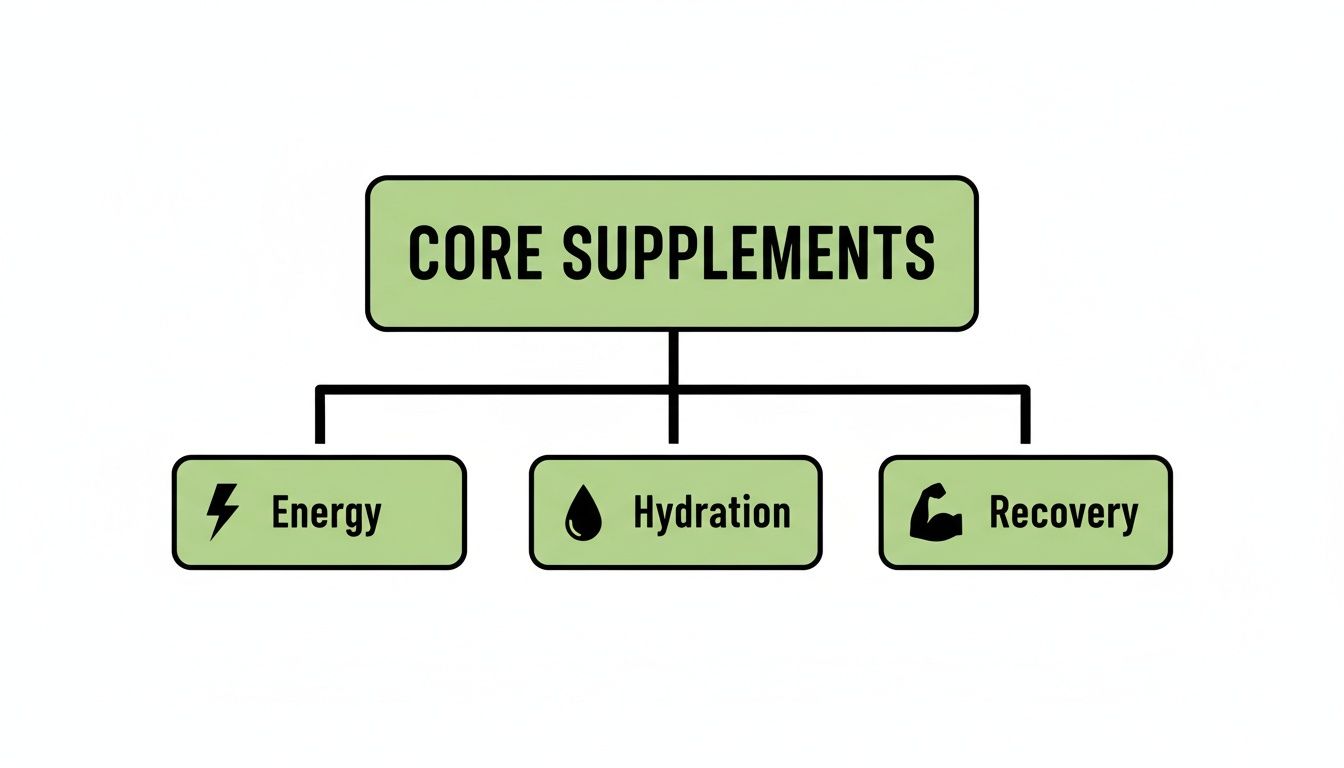
This hierarchy shows that a winning strategy depends on balancing energy, hydration, and recovery. If you let one area slide, it compromises the others and ultimately holds you back.
Here's a quick look at the key areas we’ll dig into:
- Energy and Fueling: This is all about using carbohydrates to keep your glycogen stores topped off and compounds like nitrates to help your body use oxygen more efficiently.
- Hydration and Electrolytes: Here, the focus is on replacing the essential minerals you lose through sweat to prevent cramping and keep your muscles firing properly.
- Recovery and Repair: This piece of the puzzle involves using plant-based proteins and anti-inflammatory compounds to rebuild muscle and bounce back from soreness faster.
To give you a quick reference, here’s a table summarizing the top vegan-friendly supplements for endurance.
Top Vegan Supplements For Endurance At A Glance
| Supplement Category | Primary Function | Optimal Timing |
|---|---|---|
| Carbohydrates | Sustained energy, glycogen replenishment | Before, during, and after exercise |
| Electrolytes | Hydration, nerve and muscle function | During and after exercise |
| Plant-Based Protein | Muscle repair and growth | After exercise |
| Nitrates (Beetroot) | Improved blood flow and oxygen efficiency | Before exercise |
| Tart Cherry | Reduced inflammation and muscle soreness | After exercise |
| Caffeine | Reduced perception of effort, enhanced focus | Before exercise |
This table is just a starting point. By mastering these three pillars, you build a solid nutritional foundation that supports consistent training and peak performance.
For vegan athletes, it's also smart to keep an eye on certain micronutrients that can be trickier to get from plants alone. We cover that in our complete guide on the best supplements for vegans.
Mastering Your Energy Before And During Events
Keeping your energy high during a long race or training session is a science. It goes way beyond just cramming in more carbs. The real secret is a strategic approach—thinking not just about what you're eating, but when and why.
Think of your body as a high-performance engine. Your muscles store carbohydrates as glycogen, which is your primary, high-octane fuel for intense activity. The catch? These fuel tanks are limited. When they run dry, your engine sputters, and you hit the dreaded wall. Every endurance athlete knows this feeling; it's called "bonking," and our goal is to avoid it at all costs.
The Role Of Carbohydrates In Fueling
To keep from bonking, you need a smart, two-part carbohydrate strategy. Before the event, the goal is to start with a full tank by loading up on complex carbs. During the event, you have to consistently top up the tank with simple, fast-acting carbs to spare your stored glycogen for as long as possible.
-
Complex Carbohydrates (Pre-Event Fuel): These are like slow-burning logs for the fire. Think oats, sweet potatoes, and brown rice. They break down gradually, providing a steady release of energy that tops off your glycogen stores without causing a jarring spike-and-crash in your blood sugar.
-
Simple Carbohydrates (Mid-Event Fuel): This is your kindling—it burns fast and delivers immediate energy. During a race, your body needs fuel now. This is where easily digestible gels, chews, and sports drinks containing sugars like glucose and fructose are clutch. They deliver the rapid energy your muscles need to keep firing on all cylinders.
Beyond Carbs: Plant-Based Performance Boosters
While carbs are the foundation, certain plant-based supplements can act as powerful efficiency boosters. They help your engine run smoother, use less fuel, and generate more power. Two standouts for plant-based athletes are nitrates and superfoods that enhance oxygen delivery.
Plant-based nitrates, which you can find in abundance in beetroot, convert to nitric oxide in your body. This molecule is a vasodilator, meaning it widens your blood vessels. This is like upgrading the fuel lines in your engine—it allows more oxygen-rich blood to flow to your working muscles, which seriously improves your efficiency.
Research has shown that dietary nitrates can improve exercise economy, which means you use less oxygen to maintain a given pace. This can delay fatigue and give you a real edge in time-trial events.
Another powerful ally is Chlorella, a freshwater green algae known for improving oxygen uptake. Studies suggest Chlorella can increase VO2 max—the maximum amount of oxygen your body can use during intense exercise. A higher VO2 max is a hallmark of elite endurance athletes, giving you a bigger aerobic "engine" to sustain your effort.
Caffeine: The Proven Ergogenic Aid
When fatigue finally starts to creep in during a long event, caffeine is one of the most effective and well-researched tools in an athlete's arsenal. It's a classic ergogenic aid—a substance that enhances physical performance.
Caffeine works its magic by blocking adenosine receptors in your brain. Adenosine is a neurotransmitter that signals tiredness and relaxation. By blocking it, caffeine lowers your perception of effort, making hard work feel just a little bit easier. That mental lift can be the difference between pushing through that final, grueling mile and having to slow down.
Here’s how to dial in your caffeine strategy:
- Timing is Key: Take it 30-60 minutes before you need the boost. For a marathon, this might be right before the start or just before the halfway point where you know the grind really begins.
- Know Your Dose: The sweet spot is typically 3-6 mg per kilogram of body weight. Always start on the low end to see how you react. Too much can lead to jitters or an unhappy stomach.
- Practice in Training: The golden rule: never try anything new on race day. Test your caffeine source and dose during a few long training runs to make sure your body is on board with the plan.
By combining a smart carbohydrate plan with targeted, plant-based supplements like beetroot and Chlorella, and a strategic dose of caffeine, you create a complete fueling system. This approach ensures your body has everything it needs to perform at its best, from the starting gun to the finish line.
The Science Of Hydration And Electrolyte Balance
Staying properly hydrated is about more than just quenching your thirst—it's about maintaining your body's entire electrical grid. For any endurance athlete, losing just 2% of your body weight from sweat can tank your performance. And when you sweat, you're not just losing water; you're losing critical minerals called electrolytes.
Think of your muscles and nerves as a complex electrical circuit. Water is the conductor, but electrolytes are the tiny signals that carry commands from your brain to your muscles. When you're low on electrolytes, nerve impulses start to misfire, communication breaks down, and your performance nose-dives. This is exactly why chugging plain water during a long run or ride can backfire—it dilutes the electrolytes you have left, making the problem even worse.
Why Electrolytes Are Non-Negotiable
The primary electrolytes you lose in sweat are sodium, potassium, and magnesium. Each one has a specific job to do to keep your internal "circuitry" firing on all cylinders.
- Sodium: This is the big one. It's the main electrolyte lost in sweat and it's absolutely crucial for regulating fluid balance and blood pressure. Sodium helps your body actually hold onto the water you drink, which is key to preventing dehydration.
- Potassium: Working hand-in-hand with sodium, potassium manages fluid balance inside your cells. It's also a major player in muscle contractions and nerve signaling.
- Magnesium: This mineral is a quiet workhorse, involved in over 300 different processes in the body, including energy production and muscle function. If you're running low, cramping and fatigue are often not far behind.
When these mineral levels dip too low, you start to see the classic signs of trouble: muscle cramps, nagging fatigue, dizziness, and a frustrating loss of focus. Keeping them topped off is one of the smartest moves you can make to protect your performance.
An electrolyte imbalance is like having faulty wiring in your house. The lights might flicker, or the power could cut out completely. For an athlete, that "flicker" is a muscle cramp, and a "power outage" is hitting the wall.
Calculating Your Hydration Needs
Everyone's hydration needs are a bit different. The best way to figure yours out is with a simple sweat rate test. Weigh yourself nude right before a one-hour training session. Then, weigh yourself again immediately after you finish, making sure to towel off any sweat first.
The difference in your weight, plus any fluid you drank during the session, tells you how much fluid you lost. For example, if you lost 16 ounces (1 pound), your sweat rate is roughly 16 ounces per hour. This gives you a fantastic baseline for how much you should aim to drink during workouts in similar conditions.
Choosing The Right Vegan Electrolyte Supplement
When you're shopping for an electrolyte supplement, the key for vegans is to find clean formulas without artificial colors, sweeteners, or a bunch of unnecessary fillers. Plenty of high-quality powders and liquid concentrates are designed with this in mind. A solid formula should be built around sodium, with supporting amounts of potassium and magnesium to round it out.
While powders get a lot of attention, some athletes feel that liquid mineral blends offer better absorption. For instance, our MySuperFoodRx Electrolyte Blend with Angstrom Minerals delivers electrolytes in a highly bioavailable form, making it easy for your body to put them to use quickly.
Interestingly, while hydration and protein usually steal the spotlight, other supplements are quickly gaining ground. Take creatine, for example. Its popularity has exploded, showing a massive 77% dollar value growth recently. In one consumer survey, 6% of people named creatine as their top sports supplement, just behind hydration at 8%. Backed by over 680 clinical trials, it’s proven to help replenish ATP, which is essential for those high-intensity bursts you need even during long endurance efforts. Explore more about the evolution of sports nutrition and key supplement trends.
For a more food-first approach, think about adding mineral-rich superfoods to your routine. Spirulina, a type of blue-green algae, is a great example. It naturally contains a wide spectrum of trace minerals, like iron and magnesium, which can complement traditional electrolyte powders to give you a more complete mineral profile. This helps build a stronger, more resilient foundation for your overall hydration strategy.
How To Optimize Recovery And Train Smarter
The real magic in endurance training doesn't happen on the road or the trail—it happens in the hours and days that follow. Recovery is where your body adapts, rebuilds, and gets stronger. Skipping this crucial step is like building a house without letting the foundation set.
Smart recovery is all about giving your body the right raw materials at exactly the right time. For vegan athletes, this means a strategic focus on plant-based proteins, specific amino acids, and powerful anti-inflammatory compounds to speed up muscle repair and get you back to training feeling fresh.
The Anabolic Window For Muscle Repair
Immediately after a tough workout, your body is in a uniquely receptive state. Think of your muscles as sponges, ready to soak up nutrients and kickstart the repair process. This period, often called the "anabolic window," is the best time to refuel.
The goal here is twofold: replenish your depleted glycogen (energy) stores and ignite muscle protein synthesis (MPS)—the process of rebuilding damaged muscle fibers. The most effective way to do both is by consuming a mix of fast-acting carbs and high-quality protein within 30-60 minutes post-exercise. A simple shake is often the easiest and fastest way to get these nutrients where they need to go.
Your post-workout meal isn't just about curbing hunger; it's a direct signal to your body to switch from a state of breakdown (catabolism) to a state of building (anabolism). Nailing this timing consistently is one of the biggest factors in long-term performance gains.
Choosing The Right Vegan Protein Source
For vegan athletes, the key is choosing a protein that delivers a complete amino acid profile. Plant-based sources like pea, brown rice, soy, or hemp are all excellent choices. Many of the best supplements for endurance athletes actually blend multiple plant sources to ensure you get all the essential amino acids your muscles are crying out for.
Aim for 20-30 grams of protein in your recovery shake or meal. This amount has been shown to effectively stimulate MPS without overloading your system. When you pair this with carbohydrates in a roughly 3:1 or 4:1 carb-to-protein ratio, you create a powerful recovery cocktail that refills your energy tanks and delivers building blocks straight to your muscles.
Minimizing Muscle Breakdown With BCAAs
While complete proteins are essential, three specific amino acids known as Branch-Chain Amino Acids (BCAAs) play an outsized role in muscle recovery. These are leucine, isoleucine, and valine. Leucine, in particular, acts as the primary trigger for muscle protein synthesis.
Supplementing with BCAAs, either on their own or as part of your protein powder, can help:
- Reduce Exercise-Induced Muscle Damage: They can lower the markers of muscle damage after intense endurance efforts.
- Decrease Muscle Soreness: Many athletes report less delayed onset muscle soreness (DOMS) when they supplement with BCAAs.
- Kickstart the Recovery Process: Leucine provides the direct signal your body needs to start rebuilding muscle tissue.
For vegans, getting enough BCAAs is especially important, as some plant proteins can be lower in leucine than animal-based ones. Look for a vegan protein powder that is specifically fortified with BCAAs or think about adding a separate BCAA supplement to your routine. For more information, you can explore the benefits of chlorella for athletes' endurance and recovery, as it's another superfood that supports these processes.
Fighting Inflammation Naturally
Intense training creates inflammation. While a little bit of inflammation is a necessary part of the adaptation process, chronic or excessive inflammation can drag out recovery and increase your risk of injury. Luckily, nature provides some powerful tools to help keep it in check.
Two of the most well-researched natural anti-inflammatories for athletes are tart cherry and turmeric.
- Tart Cherry: This fruit is loaded with antioxidants and compounds called anthocyanins, which have been shown to significantly cut down on muscle soreness and inflammation after a hard workout.
- Turmeric: The active compound here is curcumin, a potent anti-inflammatory that works by blocking some of the same inflammatory pathways as over-the-counter pain meds. Pairing it with a pinch of black pepper (which contains piperine) dramatically increases how much your body can absorb.
Adding these into your recovery routine can help you bounce back faster and feel less beat up from tough training blocks. You can find them as concentrated juices, powders, or capsules.
By creating a complete recovery system—combining fast-acting carbs, complete plant protein, targeted BCAAs, and natural anti-inflammatories—you give your body everything it needs to repair, adapt, and come back stronger for your next session.
Choosing Safe And Effective Supplements
Let's be honest: navigating the supplement industry can feel like the wild west. With so many brands making bold promises, it’s easy to get overwhelmed. But for a dedicated endurance athlete, picking a supplement isn't just about chasing performance—it’s about safety, purity, and trust.
Sure, buying an ineffective product is a waste of money. But using one that’s contaminated with banned substances or sketchy fillers could derail your season or, worse, your health. This is why learning to spot high-quality, trustworthy products is a non-negotiable skill. You need a way to cut through the marketing hype and get to what really matters.
Decoding Quality: The Role Of Third-Party Testing
The single most important factor in choosing a safe supplement is third-party testing. Think of these certifications as an unbiased inspection for your supplements. Independent labs test products to verify that what's on the label is actually what's in the bottle—and just as importantly, what isn't.
These labs have no financial stake in selling the product, so their analysis is completely objective. They check for several key things:
- Ingredient Purity: Is the product free from nasty contaminants like heavy metals, pesticides, or microbes?
- Potency and Accuracy: Does the supplement actually contain the amount of the active ingredient listed on the label?
- Banned Substances: Has the product been screened for substances prohibited by major athletic organizations?
For any serious athlete, that last point is a big deal. A tainted supplement can lead to a failed drug test, even if you took it by accident.
Choosing products with third-party verification is your insurance policy. It shifts the burden of proof from you to the manufacturer and provides a layer of protection that brand claims alone just can't offer.
So, how do you spot them? Look for logos from reputable organizations on the packaging. The two most recognized seals of approval in the sports world are NSF Certified for Sport and Informed-Sport. Seeing one of these logos means the product has gone through rigorous, ongoing testing to meet the highest safety standards for athletes.
Understanding Manufacturing Standards
Beyond testing, you want to see a real commitment to quality manufacturing. The gold standard here is GMP (Good Manufacturing Practices) compliance. This is a set of regulations enforced by the FDA that ensures products are consistently produced and controlled according to strict quality standards.
GMP covers everything from where the raw materials are sourced to the cleanliness of the facility and the training of the staff. It’s a foundational requirement that shows a company takes quality control seriously. Any brand worth its salt will proudly state that its products are made in a GMP-certified facility.
Your Simple Quality Checklist
When you're evaluating any supplement, run it through this quick checklist. A product you can trust should tick all of these boxes.
- Is it Third-Party Tested? Look for the NSF Certified for Sport or Informed-Sport logo. This is your number one filter for safety.
- Is it GMP Compliant? The product should be made in a facility that follows Good Manufacturing Practices.
- Is the Label Transparent? Steer clear of "proprietary blends" that hide the exact amounts of each ingredient. You have a right to know precisely what you’re putting into your body.
- Are the Ingredients Evidence-Based? Stick with supplements backed by solid science, not just marketing fluff or a few testimonials.
- Is it Vegan-Friendly and Allergen-Free? As a plant-based athlete, you’ll want to double-check that the product is certified vegan and free from common allergens like gluten, soy, and dairy.
By following these simple steps, you can confidently choose supplements that are both effective and safe. It empowers you to build a supplement routine that actually supports your training, giving you the performance benefits you’re looking for without the unnecessary risks.
Building Your Personal Vegan Supplement Stack
All this science is great, but turning it into a daily routine is where you’ll actually see progress. A smart supplement plan isn’t about collecting a cabinet full of bottles; it's about building a targeted system that fills the specific gaps in your diet and meets your unique training demands.
Always remember the golden rule: food first. Think of your supplement stack as the final 10%—the fine-tuning for your performance engine. The real work is done by your core nutrition from whole grains, legumes, fruits, and vegetables. Supplements are just the tools you use to top off the tank, speed up repairs, and find that extra gear.
Sample Vegan Stacks For Different Athletes
Every endurance sport is a little different. A marathoner’s needs are a world away from a triathlete’s, and your supplement strategy should reflect that. Below are a few sample stacks designed for common endurance athlete profiles. Use these as a jumping-off point to build a plan that feels right for you.
The Marathon Runner
For marathoners, it’s all about sustained energy and helping your joints and muscles recover from all that high-impact pounding on the pavement.
- Pre-Run (30-60 min before): Mix beetroot powder with water to help your body use oxygen more efficiently.
- During Run (every 45-60 min): One carbohydrate gel plus an electrolyte drink or capsule to keep fuel stores up and stay hydrated.
- Post-Run (within 30 min): A recovery shake with 25g of a pea/rice protein blend, 5g of vegan BCAAs, and a dose of tart cherry extract.
- Daily Support: A Chlorella or Spirulina supplement for an extra micronutrient boost and to support oxygen uptake.
The Long-Distance Cyclist
Cyclists put in long, grueling hours in the saddle. The impact is lower, but the caloric burn and sustained muscular tension are huge.
- Pre-Ride (30-60 min before): Caffeine (3mg/kg of body weight) to sharpen your focus and make the effort feel a little easier.
- During Ride (hourly): Keep the energy coming with easy-to-digest carbs like chews or a carb-electrolyte drink. You should be aiming for 60-90g of carbs per hour on those really long rides.
- Post-Ride (within 30 min): A recovery shake with 30g of plant-based protein and a serving of turmeric/curcumin to get a handle on inflammation.
- Daily Support: Take magnesium glycinate before bed to help your muscles relax and recover overnight.
The Triathlete
Triathletes have the ultimate juggling act, balancing three different sports. This calls for a versatile and seriously comprehensive recovery strategy.
A triathlete’s supplement plan has to be incredibly efficient. It needs to support everything from swim-specific shoulder fatigue to the high-impact stress of the final run. The name of the game is total-body resilience.
- Pre-Training (30-60 min before): Beetroot powder for aerobic support paired with a small, simple carb source.
- During Training: Stick with a liquid carb-electrolyte solution that’s easy to get down and digest, no matter which discipline you’re in.
- Post-Training (within 30 min): A heavy-hitting recovery shake with 30g of plant protein, 5g of creatine monohydrate, and a superfood blend like Chlorella or Spirulina.
- Daily Support: An Omega-3 supplement (from algae) to help manage the systemic inflammation that comes with high-volume training.
These stacks should give you a solid blueprint to start with. But remember, the most important thing is to test any new supplement in training—never on race day—and listen to your body to figure out what truly helps you perform at your best.
Frequently Asked Questions
Diving into the world of sports nutrition can feel like navigating a maze, especially when you're doing it on a plant-based diet. Let's tackle some of the most common questions I hear from vegan endurance athletes to help you fine-tune your approach and supplement with total confidence.
Can I Get Everything I Need From Whole Foods Alone?
A food-first philosophy should always be your foundation. A well-planned vegan diet, packed with fruits, vegetables, legumes, and whole grains, can absolutely provide most of the energy and nutrients you need to thrive.
But the intense, day-in-day-out demands of endurance training create specific, elevated needs. Frankly, it’s tough to meet those needs consistently through food alone. Supplements are simply a targeted tool to fill those gaps. Think about it: trying to choke down enough whole food to get 60-90 grams of easily digestible carbs per hour during a marathon is just not practical. This is exactly where gels, chews, and electrolyte drinks become essential for performance.
How Do I Know If a Supplement Is Actually Working?
The only way to know for sure is to be systematic. I always tell athletes to introduce just one new supplement at a time. Then, track your performance, recovery, and how you feel for at least a few weeks. Keep a simple training log and jot down any changes you notice.
Don't expect some dramatic overnight transformation. The best supplements for endurance athletes offer small, incremental benefits that really add up over time—like feeling a little less sore, bouncing back faster between sessions, or being able to hold your pace longer during those tough efforts.
This methodical approach is the only way to isolate what's truly making a difference and what’s just hype.
Are Expensive Supplements Better Than Cheaper Ones?
Price isn’t always a perfect indicator of quality, but it can definitely be a clue. More expensive products often come from brands that invest in higher-purity ingredients, rigorous third-party testing (like the NSF Certified for Sport seal), and smarter formulations, like micronized powders that your body can absorb more easily.
On the flip side, cheaper alternatives might cut corners with fillers, use proprietary blends to hide their exact ingredient dosages, or skip critical safety certifications altogether. You don’t have to buy the most expensive option on the shelf, but investing in brands that prioritize transparency and third-party verification is a smart move. Think of it as an investment in your safety and effectiveness.
Ready to build a smarter, cleaner supplement stack? At MySuperFoodRx, we offer a range of GMP-compliant, vegan superfoods like Chlorella and Spirulina to support your endurance goals from the inside out. All our products are third-party tested and formulated for purity and potency. Explore our collection and elevate your performance today.


