


Before we even get into natural supplements for immune support, we have to talk about the system you're actually trying to help. It's easy to think of immunity as a simple wall, but it’s much more like a highly advanced intelligence agency with two distinct divisions working together to keep you safe.
How Your Immune System Really Works
Your immune system isn't just one thing—it’s a complex, coordinated network of cells, tissues, and organs. Its main job is to spot foreign invaders like bacteria and viruses, take them out, and then remember them so they can’t cause trouble again.
When you understand its two main branches, you start to see how supplements can offer targeted reinforcement instead of just a blunt "boost."
The Two Branches of Your Immune Defense
Picture your body as a fortress that's always on high alert. This fortress has two very different security teams:
-
The Innate Immune System: This is your first-response team—the guards at the gate. They act immediately and non-specifically against anything that looks like a threat. When you get a cut, that immediate swelling and redness is this team rushing to the scene. They’re fast, instinctual, and built to contain problems before they get out of hand.
-
The Adaptive Immune System: Think of this as your specialized task force, an elite team of detectives and soldiers. When the innate system runs into a new or powerful invader, it calls in this crew. The adaptive system carefully identifies the specific pathogen, develops custom weapons (antibodies) to destroy it, and—most importantly—creates a "memory" of the threat. This is why you usually only get chickenpox once.
Balancing the System, Not Just Boosting It
The phrase "immune-boosting" is a bit misleading. An overactive immune system can be just as bad as an underactive one, leading to things like allergies and autoimmune conditions. The real goal is immune balance—making sure both the first-response guards and the specialized task force are well-rested, well-fed, and communicating clearly.
A healthy immune response is about precision, not just power. It requires a balanced system that can react swiftly and appropriately to threats without causing unnecessary collateral damage to the body.
Modern life has a knack for throwing this delicate balance off. Chronic stress, not enough sleep, and nutritional gaps can all weaken your defenses, leaving you more vulnerable. For instance, consistently sleeping less than six hours a night can seriously impair your body's ability to fight off viral infections. At the same time, high levels of stress hormones like cortisol can directly suppress the production of your most important antibodies.
This is exactly where natural supplements for immune support come in. They aren't designed to just crudely ramp up your immune system. Instead, they act as essential resources and tools, providing the specific vitamins, minerals, and compounds your internal defense teams need to function at their best.
They help fill nutritional gaps, manage the body's stress response, and support the intricate communication pathways that allow your immune system to perform optimally. By nourishing this complex network, you're not just fighting off sickness—you're building a foundation of true resilience.
The Foundational Nutrients for Immune Resilience
While exotic herbs and superfoods get a lot of attention, true immune resilience begins with a solid foundation. You can't build a strong house on shaky ground, and your immune system is no different—it relies on a consistent supply of essential micronutrients to function at its best. These are the non-negotiable building blocks your body needs every single day.
Think of these nutrients less as simple ingredients and more as the key personnel in your body's internal defense agency. If you're running low on any one of them, the entire security operation can be compromised. Let's meet the core team responsible for your day-to-day protection.
The infographic below shows the two main branches of your immune system that these nutrients support—the fast-acting innate response and the more specialized adaptive response.
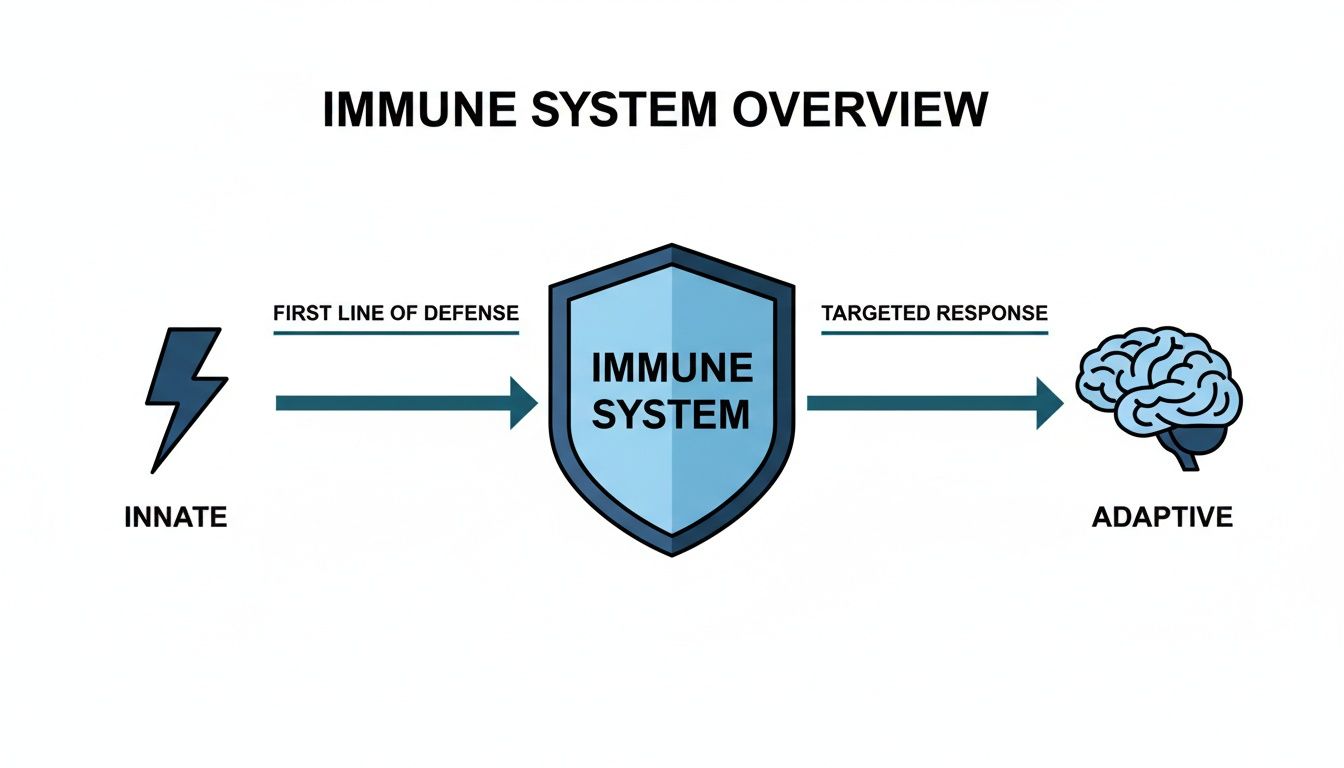
This visual really drives home how a balanced immune system needs both immediate action and a long-term strategy. That coordination depends entirely on the nutrients we're about to cover.
Vitamin C: The Rapid Repair Medic
Vitamin C, or ascorbic acid, is the tireless "field medic" of your immune system. It rushes to the site of cellular damage caused by infections and inflammation, helping to repair tissues and shield your cells from oxidative stress. It’s also crucial for stimulating the production and function of white blood cells, especially the neutrophils that act as your frontline soldiers against bacteria.
While citrus fruits get all the fame, other plant-based sources are even more powerful:
- Bell Peppers: A single red bell pepper can pack over 150 mg of vitamin C.
- Kiwifruit: An excellent source that also delivers other beneficial antioxidants.
- Broccoli and Kale: These dark leafy greens are true nutritional powerhouses.
Vitamin D: The Master Regulator
Often called the "sunshine vitamin," Vitamin D functions as the "master regulator" of the immune system. Its main job is to make sure your defenses don't under-react—or just as critically, over-react. This balancing act is essential for preventing the kind of excessive inflammation that can contribute to autoimmune issues.
Vitamin D helps activate T-cells, the special forces of your adaptive immune system, making sure they can identify and neutralize threats effectively. Since so many people have insufficient levels, particularly those in colder climates, supplementation is often a smart move. If you're looking into supplements, it's good to know the different types and find a quality source like MySuperFoodRx Vitamin D3 Capsules.
When it comes to immune function, it’s vital to choose Vitamin D3 (cholecalciferol) over Vitamin D2. Research consistently shows D3 is far more effective at raising and maintaining vitamin D levels in the blood, making it the clear winner for supplementation.
Zinc: The Communications Officer
If Vitamin D is the regulator, then Zinc is the "communications officer." This essential mineral is needed for hundreds of enzyme reactions, including the ones that allow your immune cells to signal each other. Without enough zinc, your immune system’s ability to coordinate a response is seriously weakened.
Zinc supports the development and function of key immune cells like natural killer cells and lymphocytes. Even a minor deficiency can quickly lead to a sluggish immune response.
For those on a vegan diet, getting enough zinc requires a conscious effort. The best plant-based sources include:
- Pumpkin Seeds
- Lentils and Chickpeas
- Hemp Seeds
- Tofu
When choosing a supplement, look for forms that are easy for your body to absorb, like zinc picolinate or zinc gluconate. They're generally better utilized than zinc oxide.
Selenium: The Antioxidant Bodyguard
Last but not least, Selenium is the "antioxidant bodyguard." It works to protect the body from the oxidative stress that can run wild during an infection. This mineral is a key component of powerful antioxidant enzymes like glutathione peroxidase, which helps rein in inflammation and prevent damage to your immune cells.
By keeping oxidative stress under control, selenium allows your immune system to work more efficiently and mount a stronger, more measured response to pathogens. Luckily, getting your daily dose is incredibly simple. Just one or two Brazil nuts a day is typically all you need.
By making sure you have enough of these four foundational nutrients, you're giving your body's defense team the essential tools they need to keep you healthy and resilient all year long.
Exploring Herbal and Fungal Allies for Immunity
Beyond the essential vitamins and minerals, the plant and fungal kingdoms offer a treasure trove of powerful allies for immune support. These ingredients have been mainstays in traditional medicine for centuries, and modern science is finally catching up, recognizing their unique and sophisticated ways of supporting our body’s defenses.
Unlike basic nutrients that act as raw materials, these botanicals work more like coaches and strategists for your internal defense team. They help modulate and train your immune responses, preparing them for action.
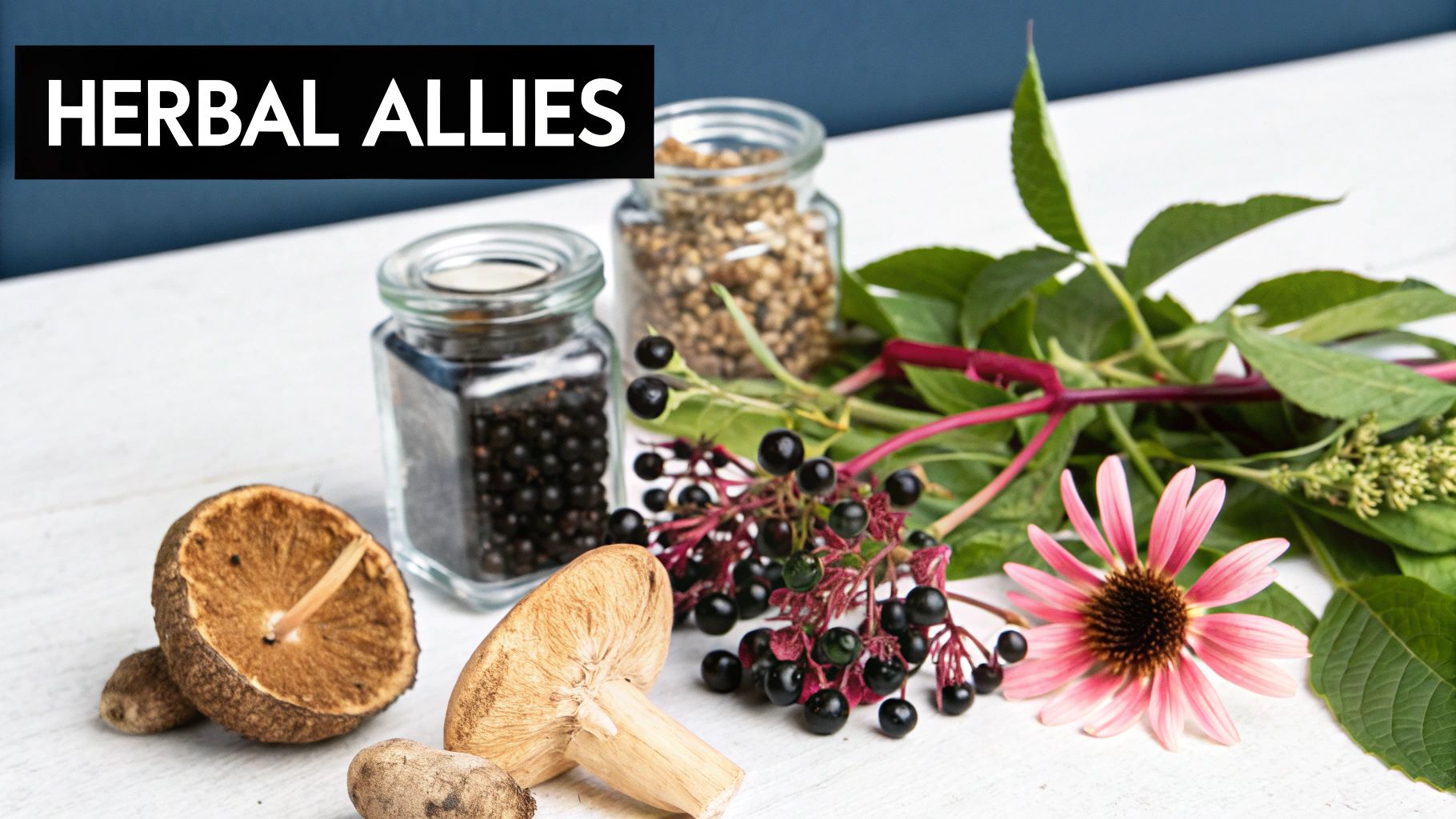
This isn't just a niche interest anymore. The global market for herbal supplements is booming as more people seek out plant-based solutions for their health. Projections show the market is expected to jump from USD 101.0 billion in 2025 to a massive USD 201.1 billion by 2035, all driven by a worldwide shift toward proactive, preventive wellness.
Elderberry: The Protective Gatekeeper
Think of Elderberry (Sambucus nigra) as a vigilant "gatekeeper" for your cells. It's packed with potent antioxidants called anthocyanins, which appear to work by binding to viruses. This clever mechanism can help block them from entering your cells and hijacking them to replicate.
Because of this, elderberry is particularly useful for acute support when you feel something coming on. Studies suggest that taking it at the first sign of illness may help shorten the duration and lessen the severity of cold and flu symptoms, helping you get back on your feet faster.
Echinacea: The Immune Boot Camp Instructor
If elderberry is the gatekeeper, then Echinacea is the "boot camp instructor" for your immune system. It doesn't just add more soldiers; it whips the ones you already have into shape, making them more alert and ready for action. It’s thought to increase the number and activity of key immune cells like phagocytes, which are responsible for gobbling up pathogens.
This makes echinacea best for short-term, targeted support. It’s what you reach for when you feel that first tickle in your throat or know you’ve been exposed to something. It isn't meant for long-term daily use, but it’s a powerful ally when you need an immediate response.
The key to using herbs like echinacea effectively is timing. Starting it at the very first sign of feeling unwell gives your immune system the head start it needs to mount a more robust and efficient defense.
Medicinal Mushrooms: The Master Strategists
Medicinal mushrooms like Reishi, Chaga, and Turkey Tail are the "master strategists" of the immune world. These fungi are known as adaptogens, which means they help your body adapt to and manage stress—a major factor that can weaken your defenses.
Their real power comes from compounds called beta-glucans. These are complex polysaccharides that interact with immune receptors in your gut, helping to modulate the entire system so it doesn't overreact or underreact.
- Reishi (Ganoderma lucidum): Often called the "mushroom of immortality," Reishi is prized for its calming properties and its ability to support a balanced immune response.
- Turkey Tail (Trametes versicolor): As one of the most-researched medicinal mushrooms, it contains compounds shown to support the function of your natural killer cells.
- Chaga (Inonotus obliquus): Loaded with antioxidants, Chaga helps protect your cells from the oxidative stress that often comes with an immune response.
Unlike echinacea, medicinal mushrooms are perfect for long-term, daily use to build foundational resilience. They work subtly over time, helping to create a more intelligent and balanced immune system that’s ready for whatever comes its way.
Speaking of plant-based powerhouses, you can also explore how chlorella provides immune system benefits in our detailed guide. By integrating these herbal and fungal allies, you can add a new layer of sophisticated support to your daily wellness routine, fortifying your body’s natural ability to stay healthy and strong.
The Gut-Immune Connection: Superfoods and Probiotics
When you think about building a rock-solid immune system, your mind probably jumps to vitamins and herbs. That’s a great start, but the real headquarters of your body's defense system is somewhere you might not expect: your gut.
It’s true—a staggering 70% of your immune cells call your digestive tract home. This deep, intricate relationship is known as the gut-immune axis. Think of your gut lining as a dynamic communication hub. When it's healthy and balanced, your immune cells are sharp, responsive, and know exactly how to handle threats. But if that balance is thrown off, your defenses can get confused and weaken.
This is where probiotics come in. These are the "good guys"—beneficial bacteria that help maintain peace and order in your gut ecosystem. They communicate directly with your immune cells, essentially training them to tell the difference between a real invader and a harmless substance. This training is key to preventing overreactions that can lead to things like allergies and chronic inflammation. For a deeper dive, check out our guide on the best probiotics for gut health.
The Power of Green Superfoods
While probiotics act as the peacekeepers, certain superfoods create a healthier environment for them to flourish. Green algae like Chlorella and Spirulina are particularly potent allies here.
Their high chlorophyll content works like an internal clean-up crew, binding to unwanted toxins and heavy metals so your body can safely eliminate them. By clearing out this metabolic clutter, these superfoods lighten the load on your immune system, freeing it up to focus on protecting you. A clean headquarters is an effective headquarters.
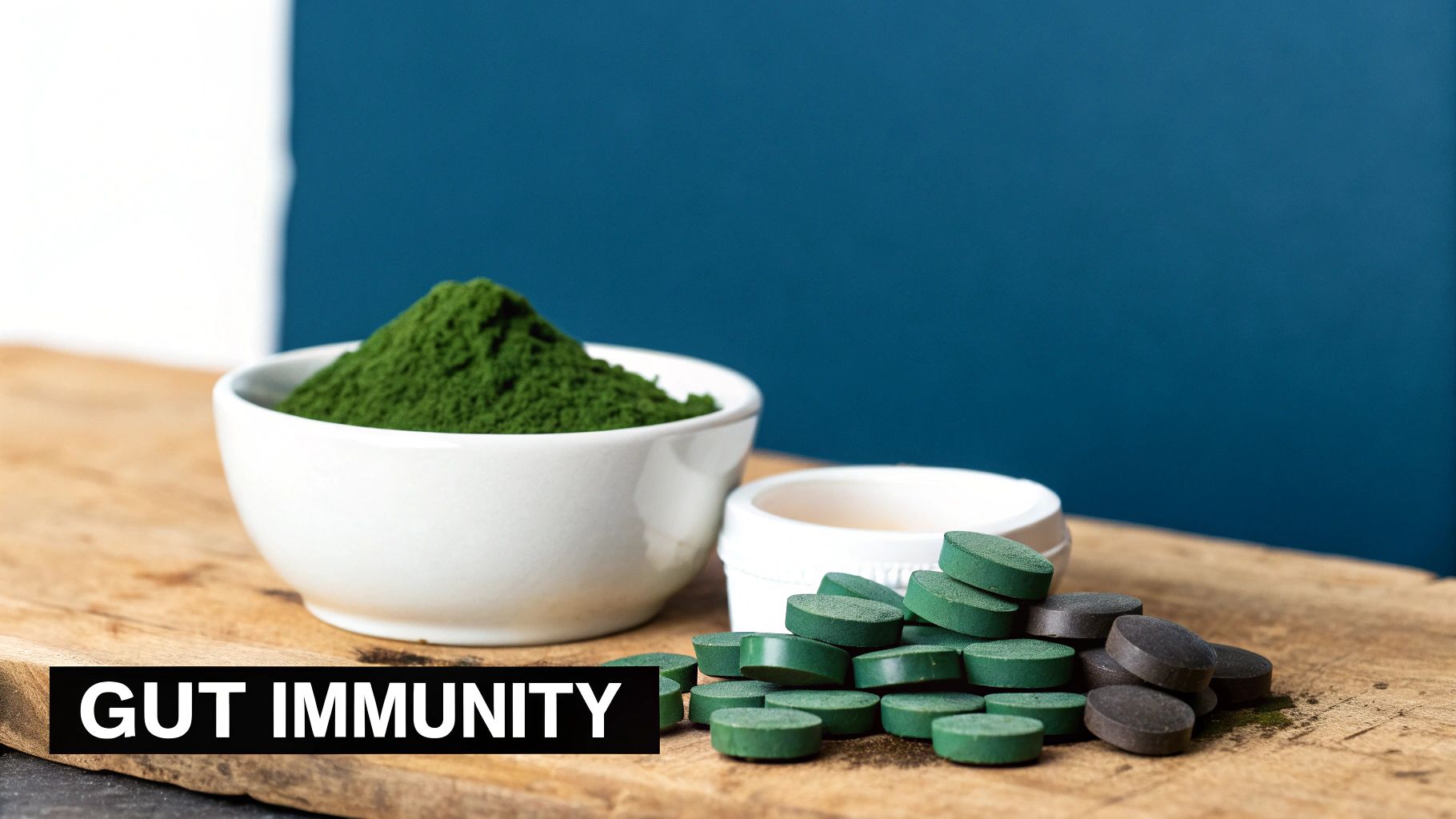
Spirulina and Its Immune-Modulating Compound
Spirulina, a vibrant blue-green algae, contains a powerful compound called phycocyanin. This is the pigment that gives spirulina its unique color, but it's also a powerhouse antioxidant that helps fine-tune your immune response. Phycocyanin shields your cells from oxidative damage and supports a balanced inflammatory reaction.
The demand for natural immune support has skyrocketed recently. Back in 2020, the pandemic led to a 50% spike in supplement use in the U.S., with sales of vitamin C and zinc jumping 3-5 times. Now, plant-based alternatives are in the spotlight. Spirulina, with its phycocyanin, has shown 20-30% greater antioxidant activity than many synthetic vitamins and is known to enhance the activity of Natural Killer (NK) cells—your frontline viral defense.
Phycocyanin does more than just fight free radicals; it actively communicates with your immune system. It helps ensure that defender cells, like NK cells, stay vigilant and effective without becoming overzealous. This promotes a state of balanced readiness.
Practical Ways to Integrate Superfoods
Bringing these superfoods into your daily routine is much easier than it sounds, even if you have a busy lifestyle or follow a vegan diet.
- Morning Smoothies: The simplest method is to add a scoop of chlorella or spirulina powder to your morning smoothie. The fruit, greens, and plant-based milk will easily blend with the flavor.
- Energy Bites: For a great pre-workout or afternoon snack, mix a 50/50 chlorella-spirulina blend with oats, dates, and your favorite nut butter to create no-bake energy bites.
- Convenient Tablets: If you prefer a no-fuss approach, high-quality chlorella and spirulina tablets offer a quick, tasteless way to get all the benefits on the go.
To give you a quick overview, here’s a breakdown of some of the key players we've discussed and their roles in supporting your immune health.
Key Natural Supplements and Their Immune Functions
| Supplement | Primary Immune Role | Vegan Food Sources |
|---|---|---|
| Probiotics | Balance gut bacteria, train immune cells, reduce inflammation. | Fermented foods like kimchi, sauerkraut, kombucha, vegan yogurt. |
| Chlorella | Detoxifies by binding to heavy metals, reducing immune burden. | Available as a supplement; it is a single-celled green algae. |
| Spirulina | Modulates immune response with phycocyanin, enhances NK cell activity. | Available as a supplement; it is a blue-green algae. |
This table highlights how different natural supplements work together to create a robust defense system, starting from your gut.
By focusing on the gut-immune connection, you’re getting to the root of your body’s defenses. Combining the community-building power of probiotics with the clean-up crew of chlorella and spirulina is a comprehensive strategy for building lasting resilience from the inside out. This approach is especially valuable for vegans and athletes seeking clean, effective, and sustainable natural supplements for immune support.
How to Choose High-Quality Natural Supplements
Walking down the supplement aisle can be completely overwhelming. With so many brands making big promises, how do you actually know if you’re choosing natural supplements for immune support that are pure, potent, and effective? It all comes down to learning how to read the label like an expert and spotting the key markers of quality.
A great supplement isn't just about what's inside; it's a reflection of the entire journey from farm to bottle. Brands that are serious about quality will proudly show off certifications that back up their commitment to purity and safety. These seals are your first line of defense, confirming the product has met rigorous standards.
Decoding Quality Certifications
Think of these certifications as a background check for your supplements. They’re proof from an unbiased third party that what’s on the label is actually what you’re getting.
- Third-Party Testing: Keep an eye out for seals from independent labs like NSF International or USP (United States Pharmacopeia). These organizations test products for purity, potency, and contaminants, so you can be confident you’re getting what you paid for.
- USDA Organic: This seal is your guarantee that the ingredients were grown without prohibited pesticides, synthetic fertilizers, or GMOs. It’s an essential marker for anyone looking for clean, plant-based supplements.
- GMP (Good Manufacturing Practices): This certification ensures the supplement was produced in a facility that follows strict FDA guidelines for quality control. It’s a non-negotiable for any reputable brand.
When you choose a product with these certifications, you're investing in your own safety and the brand's transparency. It’s the simplest way to steer clear of low-quality supplements that might be ineffective or, even worse, harmful.
Beyond these seals, the supplement facts panel tells its own story. You need to pay close attention to the ingredient list and watch out for a few red flags that scream "subpar product."
Spotting Red Flags on the Label
A cleverly designed label can hide a lot. Knowing what to look for will save you from wasting money on products that just don't work.
One of the biggest red flags is a "proprietary blend." This is a sneaky tactic where a manufacturer groups a bunch of ingredients together under one name without revealing the exact amount of each. This makes it totally impossible to know if you're getting a clinically effective dose of the most important ingredients.
Also, scan the list for unnecessary additives. A long list of artificial fillers, colors, binders, or sweeteners is usually a sign of a lower-quality formula. Your immune supplement should be packed with active ingredients, not cheap fillers.
Finally, think about the form of the supplement itself. Innovative technologies like micronization can make a huge difference in how well your body absorbs the nutrients. This process breaks down particles into a much finer size, making them more bioavailable. For instance, some brands offer micronized chlorella or spirulina to ensure your body can actually access their full benefits.
The market for dietary supplements is massive and only getting bigger—it's expected to hit $414.5 billion by 2033, thanks in large part to the growing demand for effective herbal and natural options. As the market grows, it's more important than ever to be a savvy consumer. The brands that stand out are the ones that prioritize rigorous batch testing, soy- and dairy-free formulas, and enhanced bioavailability. You can dig deeper into these market trends in the latest research from Grand View Research. By focusing on these signs of quality, you can confidently choose products that are pure, powerful, and designed to deliver real results.
Your Questions About Immune Supplements, Answered
When you start digging into the world of natural immune support, a lot of practical questions pop up. That’s a good thing. Making smart, informed choices is the first step toward building a routine that's safe, effective, and actually works for you.
Let's clear up some of the most common questions we hear. Getting these details right will help you move from just taking supplements to strategically nourishing your body's defenses, ensuring you get the most out of your investment in long-term health.
Can I Take Multiple Immune Supplements at the Same Time?
Yes, you absolutely can—and often, you should. Many nutrients and herbs work together, creating a synergistic effect that’s more powerful than taking any single ingredient alone. For example, Vitamin C is famous for boosting the absorption of plant-based iron, a huge plus for anyone on a vegan diet. Another great pairing is Vitamin D3 with K2, which helps make sure calcium goes where it's needed in your body.
But you do need to be strategic. It’s not about just throwing everything together. High doses of certain minerals can compete for absorption in your gut. The classic example is zinc and copper; taking high-dose zinc for a long time can actually interfere with your body's ability to absorb copper, leading to an imbalance.
The best way to start is by introducing new supplements one at a time. This lets you see how your body responds to each one individually. If you have any health conditions or are on medication, the smartest move is always to chat with a healthcare professional to create a safe and effective stack that's right for you.
How Long Does It Take for Immune Supplements to Work?
This is a great question, but there's no single magic timeline. How quickly you feel a difference depends entirely on the supplement and your own body's starting point. We can generally break it down into two categories: the sprinters and the marathon runners.
Herbs designed for acute support, like Elderberry and Echinacea, are the sprinters. You’ll typically notice their effects within a few days, especially if you take them right when you start feeling run down. They're designed to act fast and help mobilize your body's immediate defenses.
Then you have the marathon runners—the foundational nutrients and adaptogens that build resilience over time.
- Vitamins and Minerals: If you’re low in a key nutrient like Vitamin D, it can take several weeks or even months of consistent daily supplementation to get your levels back into the optimal range.
- Probiotics and Superfoods: With gut-focused ingredients like probiotics or superfoods like chlorella and spirulina, consistency is everything. You're looking at a commitment of at least 4 to 12 weeks of daily use to see a real, tangible shift in your gut health and, by extension, your immune function.
The goal here isn't a quick fix. It's about building long-term strength. The true benefits, like noticing you get sick less often, are the result of steady, daily commitment.
Are Natural Supplements Safe for Everyone?
The word "natural" feels safe, but it doesn't automatically mean a supplement is right for every single person. For most healthy adults, the well-known immune supplements are perfectly safe when taken at the recommended dosages. However, some groups need to be extra careful.
If you are pregnant or breastfeeding, have an autoimmune condition, or are taking specific medications (like blood thinners or immunosuppressants), you should always talk to your doctor before starting anything new. Interactions can and do happen, so it's critical to make sure there are no conflicts.
For vegans and anyone with dietary restrictions, it’s all about checking the source of your ingredients.
- Vitamin D3: This can come from vegan-friendly lichen, but it's often derived from non-vegan lanolin (from sheep's wool).
- Capsules: The pill itself can be made from vegan-friendly vegetable cellulose or animal-derived gelatin.
Always look for reputable brands that are upfront about their sourcing and clearly label their products as vegan, organic, and free from common allergens like soy or gluten. This way, you can be sure the product aligns with both your health goals and your values.
Should I Take Immune Supplements Seasonally or Year-Round?
Honestly, the best strategy is usually a mix of both. Think of it like taking care of a house: you do regular maintenance all year long, but you bring in extra reinforcements when you know a big storm is coming.
Year-Round Support:
- Foundational Nutrients: Think of Vitamin D (especially if you live somewhere with little sun), Zinc, and Selenium as your daily maintenance crew. They keep the foundation strong.
- Gut Health: Daily support from probiotics and superfoods like chlorella keeps your crucial gut-immune axis and detoxification pathways running smoothly all the time.
- Adaptogens: Medicinal mushrooms like Reishi can be taken daily to help your body better manage stress, which is a major, year-round factor in immune health.
Seasonal or Acute Support:
- Elderberry: This is your go-to for targeted support during cold and flu season, giving your defenses an extra boost when you need it most.
- Echinacea: Save this one for short-term use—think 1-2 weeks—right when you feel that first tickle in your throat or sense an illness coming on.
This balanced approach ensures your immune system has a strong, resilient foundation day in and day out, with the ability to call in specialized reinforcements when needed. It’s a smart way to use natural supplements for immune support to stay proactive about your health, no matter the season.
At MySuperFoodRx, we are committed to providing pure, potent, and plant-based supplements to support your wellness journey. Our products are custom-formulated, organic, and rigorously tested to ensure you get the best nature has to offer.
[Discover our full range of vegan superfood supplements today at https://mysuperfoodrx.com and build your foundation for lasting health.]


