


Metabolism is not a fixed genetic trait; it is a dynamic process you can actively influence through daily choices. Your metabolic rate, the speed at which your body converts fuel into energy, serves as the engine for everything from physical performance to cognitive function. For individuals following a vegan or vegetarian lifestyle, understanding how to fine-tune this internal engine with plant-powered strategies is fundamental to achieving sustainable, long-term wellness.
While misconceptions about "fast" or "slow" metabolisms are common, often leading to fad diets or ineffective supplements, the reality is far more empowering. Lasting metabolic health is cultivated through a holistic foundation of evidence-informed nutrition, strategic physical activity, and conscious lifestyle habits. This guide is designed to cut through the noise, providing a clear roadmap with actionable and natural ways to boost metabolism.
We will explore ten powerful, plant-centric methods that integrate seamlessly into your routine. From harnessing the thermogenic effect of specific whole foods to optimizing your workout structure and sleep patterns, you will learn how to ignite your body’s inner furnace. The goal is to enhance your energy, support a healthy body composition, and build a resilient, thriving system without relying on quick fixes.
1. High-Intensity Interval Training (HIIT)
High-Intensity Interval Training (HIIT) is one of the most effective ways to boost metabolism naturally, delivering significant results in a fraction of the time compared to traditional cardio. This training style involves short, explosive bursts of all-out effort followed by brief recovery periods. The magic behind HIIT lies in a phenomenon known as Excess Post-Exercise Oxygen Consumption (EPOC), or the "afterburn effect."

This metabolic spike occurs because your body must work harder to restore its oxygen levels, repair muscle tissue, and return to its pre-exercise state. This recovery process consumes a significant amount of energy, meaning your body continues to burn calories at an elevated rate for hours after your workout has finished. For anyone with a packed schedule, HIIT offers maximum metabolic benefit without requiring hours at the gym.
How to Implement HIIT
To get started, choose an exercise you can perform at maximum intensity. A simple approach is the Tabata protocol: 20 seconds of intense work followed by 10 seconds of rest, repeated for four minutes.
-
Sample HIIT Workouts:
- Treadmill Sprints: 30 seconds of sprinting, followed by 60 seconds of walking. Repeat 8-10 times.
- Bodyweight Circuit: Perform burpees for 45 seconds, rest for 15 seconds. Then, perform jump squats for 45 seconds, rest for 15 seconds. Repeat the circuit 5 times.
- Jump Rope: 60 seconds of fast-paced jumping, followed by 30 seconds of slow walking. Repeat for 10-15 minutes.
Actionable Tips for Vegans & Vegetarians
For optimal results, aim for 2-3 HIIT sessions per week on non-consecutive days to allow for proper recovery. Fuel your body with nutrient-dense plant-based foods, focusing on complex carbohydrates for energy and protein for muscle repair. To enhance post-workout recovery, consider a clean superfood blend from MySuperFoodRx to replenish vital nutrients and support your metabolic health. Always start with a proper warm-up and finish with a cool-down to prevent injury.
2. Strength and Resistance Training
Building lean muscle mass through resistance training is one of the most powerful and lasting ways to boost metabolism naturally. Unlike fat, muscle tissue is metabolically active, burning a significant number of calories even at rest. This happens because muscle requires more energy to maintain itself, elevating your Resting Metabolic Rate (RMR) around the clock.
When you engage in strength training, you create tiny micro-tears in your muscle fibers. Your body then uses energy to repair and rebuild these fibers stronger, a process that further increases calorie expenditure. For vegans and vegetarians, this method provides a sustainable way to enhance energy levels and build a strong, efficient metabolism fueled by plant-based nutrition.
How to Implement Strength Training
You don’t need a gym membership to start building muscle. Consistency and progressive overload, which means gradually increasing the challenge, are the keys to success.
-
Sample Strength Workouts:
- Bodyweight Basics: Perform circuits of push-ups, squats, lunges, and planks. Start with 3 sets of 10-12 repetitions.
- Dumbbell Routine: Incorporate exercises like bicep curls, overhead presses, and goblet squats into your routine.
- Resistance Bands: Use bands for exercises like glute bridges, pull-aparts, and bicep curls, which are great for home or travel.
Actionable Tips for Vegans & Vegetarians
Focus on training each major muscle group 2-3 times per week, allowing at least 48 hours of recovery between sessions for the same muscles. To support muscle repair and growth, prioritize high-quality plant proteins from sources like legumes, tofu, nuts, and seeds. You can also supplement with nutrient-dense superfoods; for instance, spirulina and chlorella are excellent complete amino acid sources. Read about using chlorella as a food supplement for muscle strength to further support your fitness goals.
3. Intermittent Fasting (IF) and Time-Restricted Eating
Intermittent fasting (IF) is a powerful eating pattern that cycles between periods of eating and voluntary fasting, shifting your body into a fat-burning state. This approach isn't about what you eat, but when you eat. By extending the time between meals, insulin levels drop, allowing your body to access and burn stored fat for energy. This metabolic switch promotes cellular cleanup (autophagy) and can improve mitochondrial function, making it one of the most effective ways to boost metabolism naturally.
When your body is in a fasted state for 12 hours or more, it begins to deplete its glycogen stores and turns to fat for fuel. This process not only supports weight management but also enhances metabolic flexibility, training your body to efficiently switch between fuel sources. For those looking to optimize their metabolic health without complex diets, IF offers a structured yet flexible framework.
How to Implement Intermittent Fasting
Getting started with IF is about finding a protocol that fits your lifestyle. The most common approach is time-restricted eating, where you simply narrow your daily eating window.
-
Sample IF Protocols:
- The 16:8 Method: Fast for 16 hours and eat all your meals within an 8-hour window (e.g., eat between 12 PM and 8 PM).
- The 5:2 Diet: Eat normally for five days of the week and restrict calories to 500-600 on two non-consecutive days.
- Eat-Stop-Eat: Involves a full 24-hour fast once or twice per week, such as from dinner one day to dinner the next.
Actionable Tips for Vegans & Vegetarians
Begin gradually with a 12-hour fast and slowly extend the window as your body adapts. Stay hydrated with water, herbal tea, or black coffee during your fasting period to manage hunger. When you break your fast, prioritize nutrient-dense, plant-based meals rich in protein, fiber, and healthy fats. To ensure you're getting maximum nutrition during your eating window, consider adding MySuperFoodRx chlorella for a concentrated source of vitamins and minerals. Always ensure your total daily calorie intake is sufficient to support your energy needs.
4. Consuming Protein-Rich Plant Foods and Adequate Protein Intake
Prioritizing protein is a powerful strategy for anyone looking to boost metabolism naturally, as it has the highest thermic effect of food (TEF) among all macronutrients. This means your body expends more energy, about 20-30% of the calories consumed, just to digest, absorb, and process protein. Consistently including high-quality plant-based protein in your diet helps support this metabolic advantage and promotes satiety, keeping you fuller for longer.
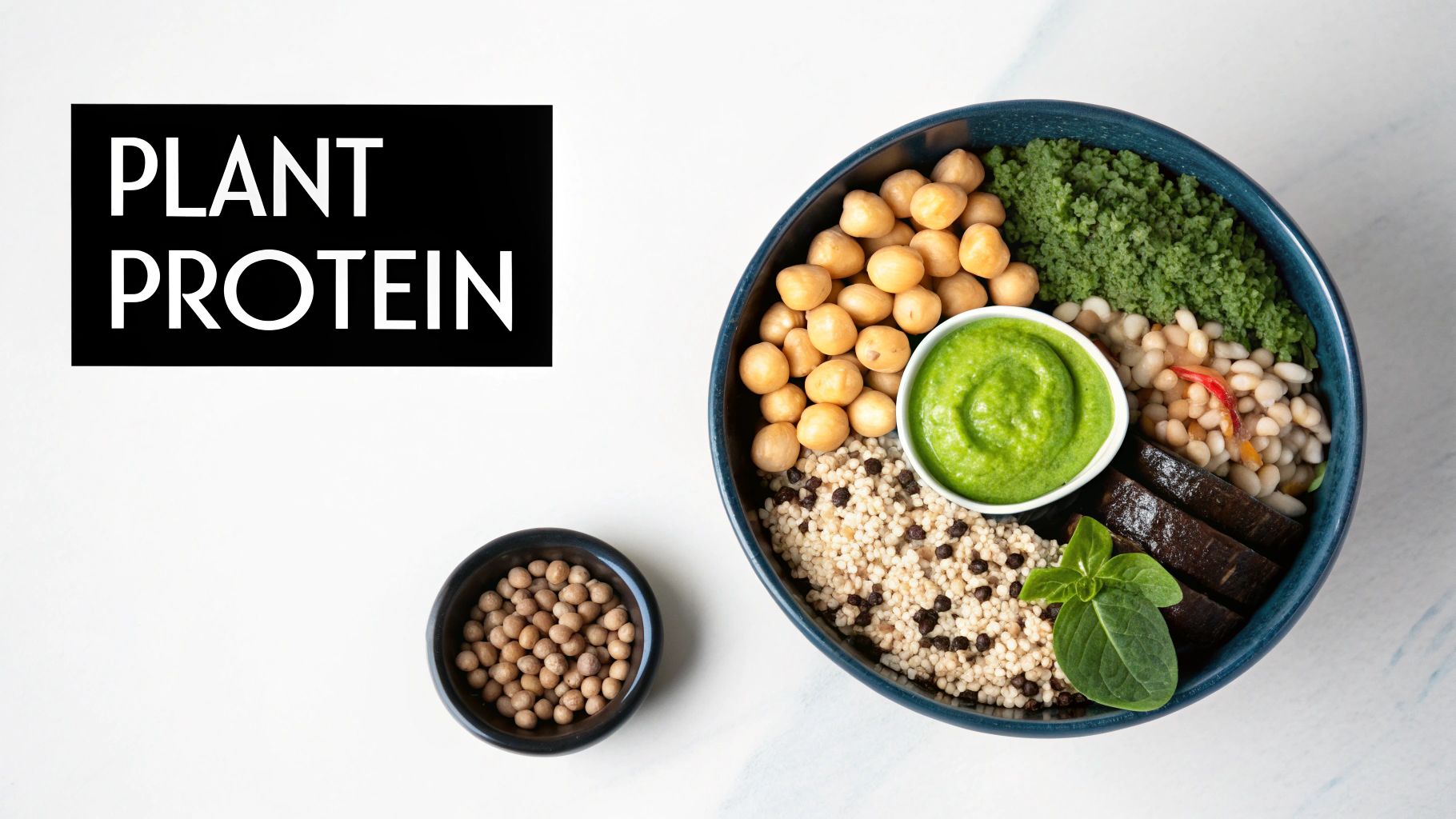
For those on a plant-based diet, getting adequate protein is crucial for maintaining metabolically active muscle mass. While individual needs vary, active individuals and athletes often require 1.6-2.2 grams of protein per kilogram of body weight. By strategically combining legumes, nuts, seeds, and whole grains, you can easily create complete amino acid profiles that fuel your body and fire up your metabolism.
How to Implement a High-Protein Plant Diet
Focus on building each meal around a primary protein source. This ensures you meet your daily targets and maximize the thermic effect of food throughout the day.
-
Sample High-Protein Meals:
- Lentil Curry: A hearty dish combining red lentils, coconut milk, and spices served over quinoa.
- Chickpea Buddha Bowl: A colorful bowl with chickpeas, mixed greens, roasted sweet potatoes, and a tahini dressing.
- Protein-Packed Smoothie: Blend a scoop of plant-based protein powder with spinach, banana, and a tablespoon of hemp seeds.
Actionable Tips for Vegans & Vegetarians
Aim for 25-35 grams of protein at each meal to optimize muscle protein synthesis and the metabolic boost from TEF. To ensure you're getting all nine essential amino acids, combine complementary protein sources like brown rice and black beans. For a convenient and complete protein source, consider adding MySuperFoodRx spirulina and chlorella to your smoothies or juices. Supplementing with digestive enzymes can also enhance the absorption of plant proteins.
5. Cold Exposure and Cold Water Immersion
Leveraging cold exposure is a powerful, albeit bracing, way to boost metabolism naturally. This practice involves intentionally exposing your body to cold temperatures, which activates a special type of fat called brown adipose tissue (BAT), or brown fat. Unlike white fat which stores energy, brown fat burns calories to generate heat in a process known as thermogenesis, effectively turning your body into a temporary furnace.

This metabolic activation occurs as a primal survival response to maintain core body temperature. By triggering this mechanism regularly, you not only increase your immediate calorie burn but can also improve your body's overall metabolic efficiency and insulin sensitivity over time. This biohack offers a direct way to stoke your metabolic fire, with the added benefits of enhanced circulation and immune function.
How to Implement Cold Exposure
You don't need a high-tech cryotherapy chamber to start. Simple, accessible methods can be just as effective for reaping the metabolic rewards.
-
Sample Cold Exposure Methods:
- Cold Showers: Start by finishing your regular shower with 30 seconds of the coldest water you can tolerate. Gradually work your way up to 2-3 minutes.
- Ice Baths: For a more intense session, fill a tub with cold water and ice until it reaches 50-59°F (10-15°C). Aim for an immersion of 10-15 minutes.
- Outdoor Immersion: If accessible, swimming in a cold lake or ocean provides a natural and invigorating form of cold therapy.
Actionable Tips for Vegans & Vegetarians
Integrate cold exposure 2-3 times per week to achieve sustained benefits without overstressing your system. To support your body’s recovery from this controlled stress, focus on nutrient-dense plant-based meals post-exposure. Enhance this recovery process by incorporating an antioxidant-rich superfood blend from MySuperFoodRx, which helps combat oxidative stress and supports cellular repair. Always listen to your body and never push past safe limits.
6. Staying Hydrated and Drinking Water Strategically
Staying properly hydrated is a simple yet powerful way to boost metabolism naturally, often overlooked in favor of more complex strategies. Water consumption temporarily increases metabolic rate through a process known as water-induced thermogenesis. This occurs because your body expends energy, or calories, to heat the water you drink to body temperature, providing a subtle but effective metabolic lift.
Studies show that drinking 500ml (about 17 oz) of water can increase resting energy expenditure by up to 30% for about an hour. Beyond this immediate effect, adequate hydration is fundamental for optimal cellular function, nutrient transport, and enzymatic reactions that drive your metabolism. Even mild dehydration can cause your metabolic rate to slow down significantly, making consistent water intake a cornerstone of metabolic health.
How to Implement Strategic Hydration
Timing your water intake can maximize its metabolic benefits and support overall wellness. Integrating this practice into your daily routine is simple and requires no special equipment.
-
Sample Hydration Schedule:
- Morning Boost: Drink 16-20 oz of water immediately upon waking to rehydrate and activate your metabolism for the day.
- Pre-Meal Hydration: Consume a large glass of water 30 minutes before each meal to aid digestion and promote satiety, potentially reducing overall calorie intake.
- Flavored Hydration: Infuse water with lemon, mint, or berries, or opt for unsweetened herbal teas to make hydration more enjoyable.
- Workout Water: Increase water intake before, during, and after exercise to replace fluids lost through sweat and support performance.
Actionable Tips for Vegans & Vegetarians
To make hydration a seamless habit, carry a reusable water bottle with you throughout the day. Aim to drink roughly half your body weight in ounces daily, adjusting for activity level and climate. To enhance nutrient absorption and cellular hydration, consider mixing your water with a high-quality superfood blend from MySuperFoodRx. For intense workouts or hot days, add a plant-based electrolyte powder to replenish essential minerals and maintain balance.
7. Consuming Metabolism-Boosting Superfoods and Thermogenic Foods
Certain foods contain compounds that naturally increase metabolic rate and have a higher thermic effect, meaning your body burns more calories just to digest them. Incorporating these metabolism-boosting superfoods and thermogenic foods into your diet is a powerful strategy to support metabolic health. Ingredients like cayenne pepper, green tea, ginger, and turmeric contain potent compounds such as capsaicin, EGCG, and gingerol that can enhance fat oxidation and mitochondrial function.
These foods don't just temporarily spike your metabolism; their nutrient density supports the underlying systems that govern your metabolic rate. For health-conscious vegans and athletes, integrating nutrient-dense superfoods like spirulina and chlorella provides a dual benefit: fueling the body with essential vitamins and minerals while also promoting one of the most effective ways to boost metabolism naturally.
How to Implement Superfoods and Thermogenic Foods
Adding these powerful ingredients to your daily routine is simple. You can easily sprinkle them into meals, blend them into smoothies, or enjoy them as beverages.
-
Sample Implementations:
- Smoothies & Bowls: Add 1-2 teaspoons of spirulina powder or papaya seed powder to your morning smoothie or breakfast bowl.
- Meals & Drinks: Sprinkle cayenne pepper and turmeric into curries, soups, and roasted vegetables. Enjoy green tea or matcha as a daily beverage.
- Supplementation: Take chlorella tablets as a daily supplement to support detoxification and metabolic function. Learn more about how chlorella can act as a metabolism-boosting supplement.
Actionable Tips for Vegans & Vegetarians
To maximize benefits, consume thermogenic foods with protein-rich meals to create a synergistic metabolic effect. Start with small amounts, such as 1-2 grams of spirulina or chlorella daily, and gradually increase to 3-5 grams as your body adapts. When choosing your superfoods, prioritize purity and potency. Opt for organic, quality-tested products like those from MySuperFoodRx to ensure you're getting a clean and effective supplement to support your metabolic goals.
8. Optimizing Sleep Quality and Quantity
Optimizing sleep is a foundational yet often overlooked strategy among the ways to boost metabolism naturally. During deep sleep, your body undertakes critical repair processes, balances key hormones, and regulates energy expenditure. Poor sleep disrupts this delicate balance, increasing the stress hormone cortisol and suppressing thyroid function, both of which slow your metabolic rate.

Consistently achieving 7-9 hours of quality sleep helps stabilize the hunger hormones ghrelin and leptin, improves insulin sensitivity, and enhances fat oxidation. Without adequate rest, other metabolic efforts like diet and exercise are less effective. Prioritizing sleep ensures your body has the restorative foundation it needs to maintain a healthy and efficient metabolism.
How to Implement Better Sleep Hygiene
Creating a consistent sleep routine is key. Start by establishing a relaxing pre-bed ritual that signals to your body it's time to wind down.
-
Sample Sleep Routines:
- Consistent Schedule: Aim for a consistent bedtime and wake-up time, such as 10 p.m. to 6 a.m., even on weekends, to regulate your circadian rhythm.
- Ideal Environment: Make your bedroom cool (60-67°F), dark, and quiet. Use blackout curtains, earplugs, or a white noise machine if needed.
- Evening Wind-Down: An hour before bed, turn off screens, read a book, meditate, or enjoy a calming herbal tea.
Actionable Tips for Vegans & Vegetarians
Target 7-9 hours of quality sleep nightly. Avoid caffeine after 2 p.m. and large meals close to bedtime to prevent digestive disruption. To further support rest, consider adding MySuperFoodRx herbal supplements and digestive support products to your nightly routine. A well-rested body is better equipped to manage stress, repair muscle, and maintain a high metabolic rate.
9. Stress Management and Cortisol Regulation
Often overlooked, managing chronic stress is a crucial way to boost metabolism naturally. Persistent stress elevates cortisol, the body’s primary stress hormone, which can suppress metabolic function and promote abdominal fat storage. High cortisol levels shift your body into a state of survival, encouraging it to break down muscle tissue for energy and store fat, working directly against your metabolic health goals.
By actively lowering cortisol through relaxation techniques, you allow your metabolism to return to its optimal state. This makes stress management as vital as diet and exercise for a healthy metabolic rate. Addressing the stress-metabolism connection is a non-negotiable step for anyone serious about their long-term wellness.
How to Implement Stress Management
Integrating stress-reducing activities into your daily routine can effectively lower cortisol and support your metabolism. The key is consistency, even if you only have a few minutes each day.
-
Sample Stress-Reduction Practices:
- Daily Meditation: Start with 10-20 minutes using an app like Calm or Headspace to guide your practice.
- Mindful Movement: Engage in yoga (vinyasa or restorative styles) or tai chi to connect mind and body.
- Breathwork: Use the 4-7-8 breathing technique (inhale for 4, hold for 7, exhale for 8) to calm your nervous system instantly.
- Nature Therapy: Spend time walking outdoors, as exposure to nature has been shown to lower cortisol.
Actionable Tips for Vegans & Vegetarians
Begin by dedicating just 5-10 minutes each morning to a mindfulness practice to set a calm tone for the day. Combine gentle movement with targeted nutrition to support your nervous system. Some plant-based superfoods are known for their adaptogenic properties and can aid in stress relief. Consider adding a high-quality superfood blend from MySuperFoodRx to your routine, as certain ingredients can support the body’s response to stress. For a deeper dive, explore how chlorella can be a powerful supplement for stress relief to further enhance your stress management efforts.
10. Eating Smaller, Frequent Meals and Mindful Eating
The idea of eating smaller, frequent meals is a nuanced strategy for boosting your metabolism naturally. While the total calories consumed in a day matter most, this approach, when combined with mindful eating, supports stable blood sugar, sustained energy, and prevents the metabolic slowdown that can occur with prolonged fasting or undereating. Each meal triggers the Thermic Effect of Food (TEF), and spreading your intake can help maintain this process throughout the day.
The real power of this method comes from pairing it with mindful eating. By eating slowly, chewing thoroughly, and eliminating distractions, you enhance digestion and improve your body's ability to recognize satiety cues. This prevents overeating and ensures you absorb the maximum nutrients from your food, both of which are crucial for optimal metabolic function.
How to Implement This Approach
The goal is to structure your day with 5-6 well-balanced, smaller meals or snacks instead of 2-3 large ones. This keeps your energy levels consistent and your metabolism engaged.
-
Sample Meal & Snack Ideas:
- Balanced Structure: Ensure each meal contains plant protein, complex carbohydrates, healthy fats, and fiber.
- Nutrient-Dense Snacks: An apple with almond butter, a handful of walnuts and seeds, or a smoothie with spinach and plant-based protein.
- Mindful Eating Practice: Put away your phone and computer. Focus on the taste, texture, and aroma of your food, chewing each bite at least 20 times.
Actionable Tips for Vegans & Vegetarians
To make this strategy work, preparation is key. Prepare meals and snacks in advance to avoid unhealthy impulse choices. Ensure each small meal provides 20-30 grams of plant-based protein and ample fiber to promote fullness. To elevate the nutrient density of your snacks and meals, consider adding a scoop of a clean superfood blend from MySuperFoodRx, which supports satiety and provides vital micronutrients for metabolic health. Always listen to your body’s hunger and fullness signals to guide your timing and portions.
10 Natural Metabolism Boosters Comparison
| Approach | 🔄 Implementation complexity | ⚡ Resources & time requirements | ⭐ Expected effectiveness | 📊 Typical outcomes / impact | 💡 Key tip |
|---|---|---|---|---|---|
| High-Intensity Interval Training (HIIT) | Moderate–high (technique & intensity control) | Low equipment, short sessions (15–30 min, 2–3×/wk) | ⭐⭐⭐⭐ | Large calorie burn + prolonged EPOC; improved cardio | Warm up, start with short intervals; 2–3 sessions/week |
| Strength & Resistance Training | Moderate (programming + progressive overload) | Moderate time (30–60 min), weights/bands or bodyweight | ⭐⭐⭐⭐⭐ | Increases resting metabolic rate via muscle mass; better body composition | Train major groups 2–3×/wk; progressively increase load |
| Intermittent Fasting / Time-Restricted Eating | Low (schedule-based) | Time-only; meal planning during eating window | ⭐⭐⭐⭐ | Improved fat oxidation, insulin sensitivity, cellular repair | Start 12–14h fasts → progress to preferred protocol; hydrate |
| Protein-Rich Plant Foods & Adequate Intake | Moderate (meal planning) | Meal prep, higher-quality legumes/seeds; modest cost | ⭐⭐⭐⭐ | Greater thermic effect, muscle preservation, satiety | Aim 1.6–2.2 g/kg/day; distribute ~25–35g protein/meal |
| Cold Exposure & Immersion | Low–moderate (adaptation + safety precautions) | Minimal cost (cold showers) to moderate (ice baths); short sessions | ⭐⭐⭐ | Brown fat activation, temporary metabolic boost, improved resilience | Start with 30s bursts; progress gradually; consult MD if heart issues |
| Staying Hydrated & Strategic Water Intake | Low (habit formation) | Minimal cost/time; frequent small intakes throughout day | ⭐⭐⭐ | Short-term water-induced thermogenesis; better digestion & performance | Drink ~500ml on waking; hydrate before meals; adjust electrolytes |
| Metabolism-Boosting Superfoods & Thermogenic Foods | Low (incorporation into meals) | Purchase quality supplements/ingredients; small prep time | ⭐⭐⭐ | Modest metabolic lift plus nutrient density and mitochondrial support | Start low dose (e.g., 1–2g spirulina); prioritize tested, high-quality sources |
| Optimizing Sleep Quality & Quantity | Moderate (habit & environment changes) | Requires time (7–9h/night) and environmental control | ⭐⭐⭐⭐⭐ | Hormone regulation, improved recovery, sustained metabolic function | Consistent sleep schedule; cool, dark room; limit screens before bed |
| Stress Management & Cortisol Regulation | Low–moderate (practice consistency) | Minimal equipment; daily short practices (5–20 min) | ⭐⭐⭐⭐ | Reduced cortisol, better insulin sensitivity, less abdominal fat | Daily brief meditation or breathwork; combine with movement |
| Eating Smaller, Frequent Meals & Mindful Eating | Moderate (planning + habit change) | More prep/time, frequent meals/snacks during day | ⭐⭐⭐ | Stable blood sugar, repeated thermic effects, improved satiety | Prepare balanced mini-meals; eat without screens and chew slowly |
Creating Your Personal Metabolism Blueprint
You've just explored a comprehensive toolkit of strategies, each designed to help you discover effective ways to boost your metabolism naturally. The journey to a more efficient metabolic engine isn't about a single, drastic overhaul. Instead, it’s about weaving together a tapestry of sustainable habits that work in harmony, creating a powerful and cumulative effect on your body's ability to produce and utilize energy.
The true strength of this approach lies in its synergy. The muscle you build through resistance training becomes a metabolic furnace, burning calories even at rest. The high-intensity interval training sessions you complete trigger a significant afterburn effect, while the protein-rich plant foods you consume require more energy to digest. When combined with restorative sleep, mindful stress management, and strategic hydration, these individual actions amplify one another.
Your Actionable Next Steps
Rather than attempting to implement all ten strategies at once, focus on a personalized and gradual approach. Your body is unique, and what works best for you will depend on your lifestyle, preferences, and current fitness level. Consider this a menu of options, not a rigid prescription.
- Identify Your Starting Point: Choose one or two habits from this list that feel most accessible and exciting to you right now. Is it swapping your afternoon snack for a protein-packed lentil salad? Or perhaps it's committing to two 20-minute HIIT workouts per week?
- Focus on Consistency, Not Perfection: The goal is to build lasting routines. A consistent, moderate effort will always yield better long-term results than an intense but short-lived burst of activity. Celebrate small victories and be patient with your progress.
- Listen to Your Body's Feedback: Pay close attention to how you feel. Are your energy levels improving? Is your sleep more restful? Your body will provide valuable clues about what's working. Adjust your approach as needed, honoring your individual needs.
The Holistic Impact of a Healthy Metabolism
Mastering these concepts goes far beyond simply burning more calories. A well-functioning metabolism is the cornerstone of vibrant health, especially for those following a vegan or vegetarian lifestyle. It directly impacts your energy levels, mental clarity, immune function, and ability to maintain a healthy body composition.
By adopting these evidence-based practices, you are not just "speeding up" a bodily process; you are building a more resilient, efficient, and energetic version of yourself. You are creating a blueprint for long-term wellness, empowering you to thrive and achieve your health goals with confidence and vitality.
Ready to supercharge your plant-based diet with potent, metabolism-supporting nutrients? Explore the curated superfood blends from MySuperFoodRx, specifically designed to enhance energy and support your body’s natural processes. Visit MySuperFoodRx to find the perfect addition to your wellness routine.


